

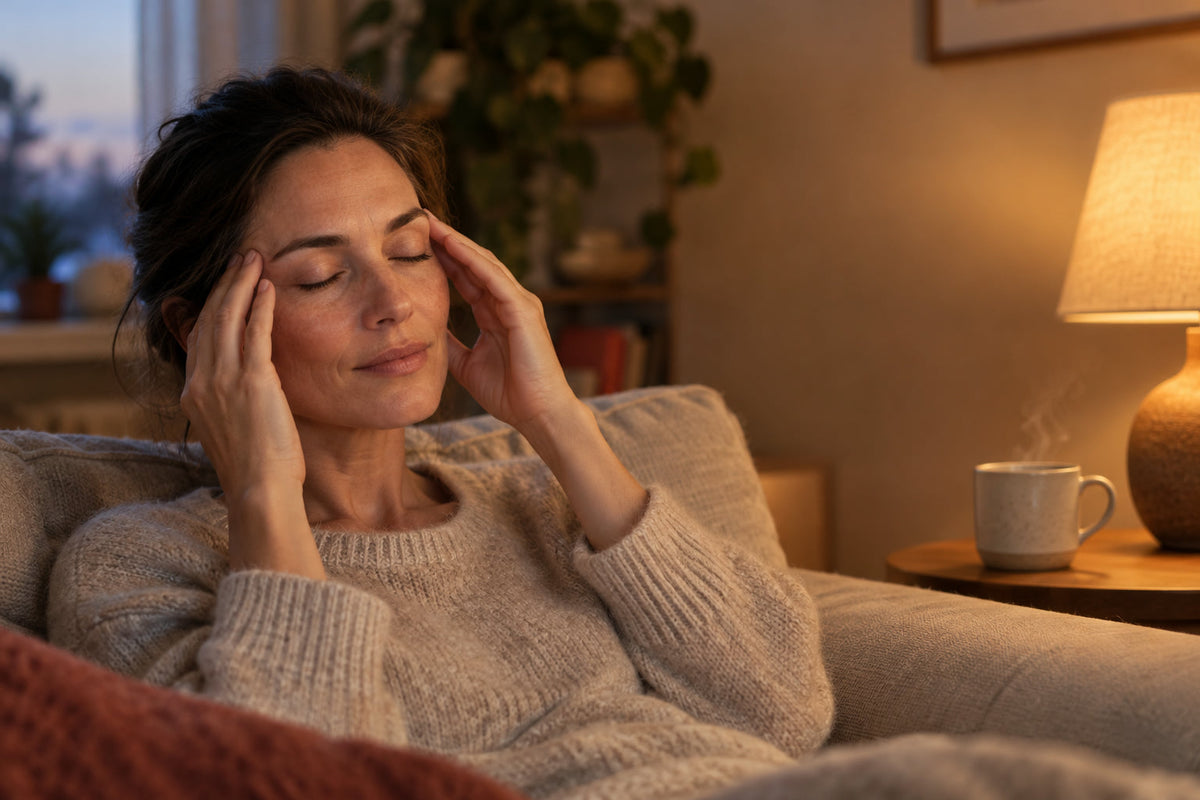
Red light therapy for migraines is an interesting idea with thin evidence. The most encouraging research is on green light, not red, and it comes from one small, early-stage trial. Studies on red and near-infrared light applied to the head are small, use varied methods and have not shown consistent results. So the honest position is this: light may be worth exploring as a gentle addition to your routine, but it is not a proven migraine treatment and it shouldn't replace advice from your GP or migraine specialist.
If you get frequent or severe headaches, speak to a healthcare professional first. This article is for general information only.
Contents
- Why light and migraine have a complicated relationship
- What the green light trial found
- What about red and near-infrared light?
- The neck and shoulder angle
- If you want to try light, how to do it sensibly
- When a headache needs a GP, not a gadget
- FAQ
Why light and migraine have a complicated relationship
For many people with migraine, light is a trigger, not a remedy. Sensitivity to light (photophobia) is one of the defining features of an attack, and bright or flickering light can make a headache feel worse. Researchers, including Noseda and colleagues at Harvard, have mapped some of the pathways involved, showing how light signals from the eye reach pain-processing areas of the brain.
That research also gave scientists a reason to look at which colours of light are the worst offenders. Blue and white light tend to worsen discomfort, while green light seems to be better tolerated. That observation is where most of the interest in light as a possible comfort tool began.
It also means the first rule for anyone with migraine is simple: don't assume a light device suits you just because it is gentle for other people. We come back to this in the "how to try" section.
What the green light trial found
The best-known study is a preliminary trial published in Cephalalgia (Martin and colleagues, University of Arizona, 2021). It recruited 29 adults with migraine: 7 with episodic migraine and 22 with chronic migraine. Participants spent 10 weeks with 1 to 2 hours a day of white LED light, then a 2-week break, then 10 weeks of green LED light. The researchers reported fewer headache days per month during the green light phase, along with better quality-of-life scores, and no adverse events.
It is worth being clear about what this does and doesn't tell us:
- It was small and open-label. Everyone knew which light they were getting, and everyone had white light first. That design can't rule out a placebo effect or a natural change over time.
- It used long daily exposures to room lighting, one to two hours at a time. That is very different from a short skincare session with a mask.
- A 2024 review, Light Therapy in Chronic Migraine (Current Pain and Headache Reports), looked at green light as an emerging non-drug option and highlighted the need for larger, properly controlled studies.
So green light is a research lead, not an established therapy. If you're curious how the different colours of LED light are used and how strong the evidence is for each, our guide to what red, green, amber and near-infrared light each do sets it out plainly.
What about red and near-infrared light?
This is where most "red light therapy for headaches" claims run ahead of the evidence.
Red (around 660nm) and near-infrared (around 850nm) light work through photobiomodulation: light is absorbed by the mitochondria, which appears to support cellular energy production and a calmer inflammatory response. That mechanism is well described, and it is why these wavelengths are studied for muscle, joint and skin outcomes. We explain it in our piece on red light therapy and inflammation.
For headaches specifically, there are a handful of small trials of low-level laser or LED light applied to the head, neck or scalp. The protocols vary widely (different wavelengths, doses, positions and session lengths), the results are inconsistent, and nobody has yet established a dose that reliably helps.
In plain terms:
- There is a plausible mechanism.
- There are some early signals.
- There is no robust evidence that a home red light device reduces migraine frequency or severity.
Anyone promising that red light will get rid of your migraines is overselling. We'd rather you hear that from us.
The neck and shoulder angle
There is one area where the link is more practical than clinical. Many people with tension-type headaches notice tight, achy muscles in the neck and shoulders, often after long hours at a desk or looking down at a phone.
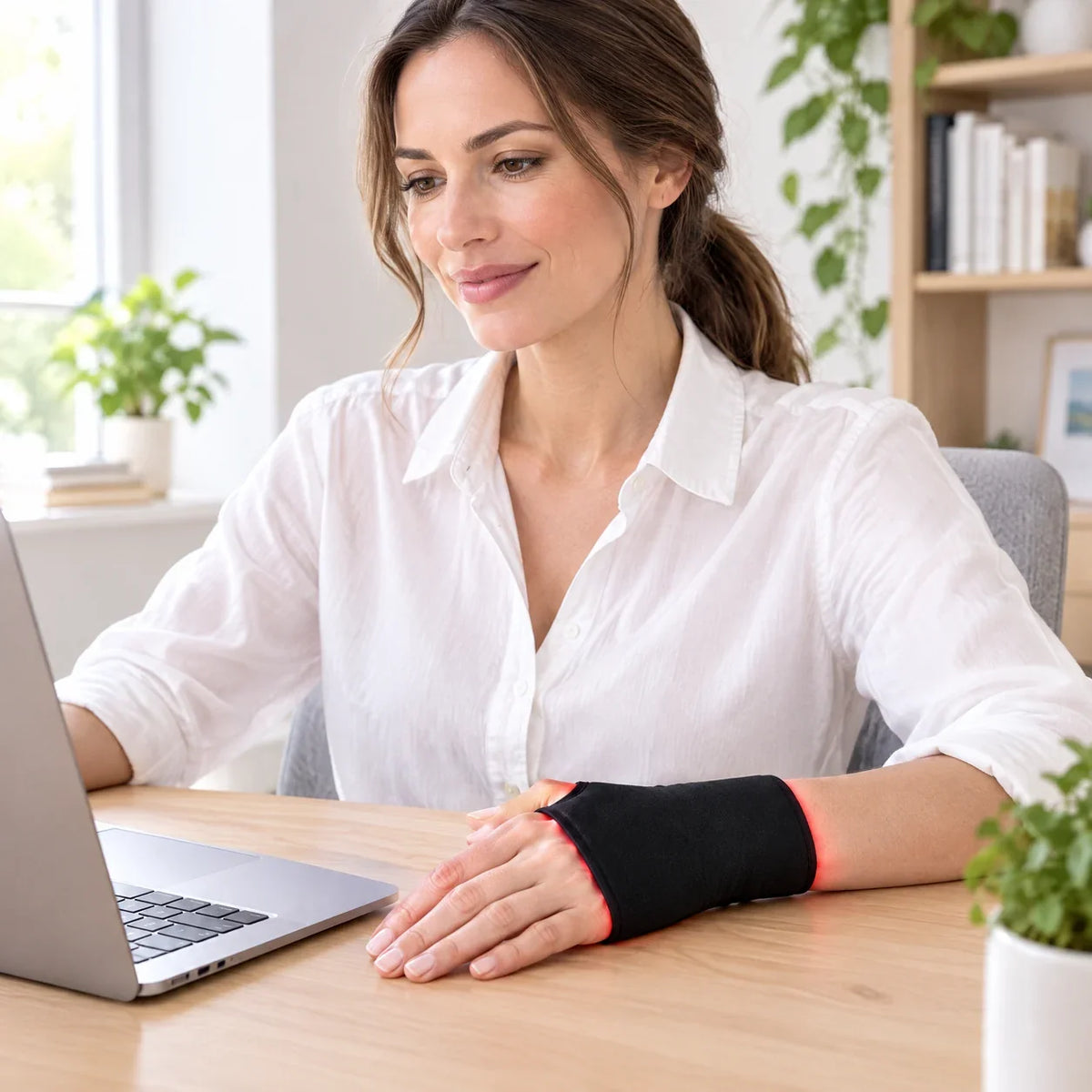
Red and near-infrared light has a better evidence base for general muscle comfort and recovery than for headaches themselves. If neck tension is part of your picture, a routine that includes light on the neck and upper shoulders may help those muscles feel looser, which some people find indirectly helpful. That is a comfort-and-recovery point, not a headache claim. Our guides to red light therapy for TMJ and jaw pain and red light therapy for stress and anxiety cover two related areas where tension and light overlap.
The Spectrum Pro LED Face Mask with Neck attachment covers the face with 328 LEDs and adds 60 LEDs across the neck, 388 in total. It was designed for skin, not for headaches, but it is a simple way to put light on the neck as part of a wind-down routine.
If you want to try light, how to do it sensibly
If you live with migraine, take the cautious route:
- Talk to your GP or neurologist first, especially if your migraines are frequent, changing, or come with aura.
- Start short. Begin with a few minutes, well below the maximum session time, and see how you feel in the hours afterwards.
- Avoid sessions during an attack. If bright light is already a problem, a light device isn't the answer in that moment.
- Choose comfort over intensity. Dim the room, keep your eyes closed or avoid looking directly at the LEDs, and stop if you feel any discomfort. Our eye safety guide for LED masks explains the habits that matter.
- Keep a simple diary. Note the date, session length and any headache days. Without tracking, you can't tell whether light is making any difference.
- Protect your sleep. Poor sleep is a common migraine trigger, and evening light can affect it. See our piece on red light therapy and sleep.
Check our red light therapy safety guide for who should avoid light devices, including people taking light-sensitising medication.
When a headache needs a GP, not a gadget
Seek medical advice promptly if you have:
- A sudden, severe "worst ever" headache
- A headache following a head injury
- Headache with fever, a stiff neck, confusion, weakness, vision changes or difficulty speaking
- A new pattern of headaches after the age of 50
- Headaches that are getting steadily worse
Call 999 or go to A&E for any sudden severe headache that comes with neurological symptoms. The NHS guidance on migraine is the right starting point for anything that worries you.
The bottom line
Light and migraine is a genuine research area, but the evidence is early. Green light has the most interesting signal, from one small trial. Red and near-infrared light have a plausible mechanism but no robust headache evidence. If you'd like a gentle wind-down routine, the Spectrum Pro LED Face Mask has four modes, including Calm (green 525nm), though it was designed for skin rather than migraine, and the Mask + Neck set adds coverage across the neck. Both come with 30-day returns and a 2-year warranty.
Frequently Asked Questions
Can red light therapy help with migraines?
There is no robust evidence yet. A plausible mechanism exists and a few small studies have looked at light on the head or neck, but the results are inconsistent. The most promising early research is on green light, not red.
Is green light better than red light for migraines?
In current research, green light has the more interesting early signal for migraine, based on a small 2021 trial. It remains preliminary. Red and near-infrared light have stronger evidence for muscle and skin outcomes than for headaches.
Can red light therapy trigger a migraine?
It can in some people. Light sensitivity is common in migraine, and any bright light may be uncomfortable. Start with very short sessions, keep your eyes closed, and stop if you feel any worsening.
Can red light therapy help tension headaches?
Tension headaches often come with tight neck and shoulder muscles. Red and near-infrared light is better studied for muscle comfort than for headaches, so it may help those muscles feel looser, but there is no strong evidence that it does anything for the headache itself.
Where should I use light for a headache?
Studies have varied, using the scalp, forehead, temples and neck, and no standard placement has been established. If you're trying light for general comfort, the neck and upper shoulders are the most sensible place to start.
Should I use a red light device during a migraine attack?
Generally no. During an attack, light sensitivity is usually at its worst. Rest in a dark, quiet room and follow your doctor's advice.


Leave a comment
This site is protected by hCaptcha and the hCaptcha Privacy Policy and Terms of Service apply.