

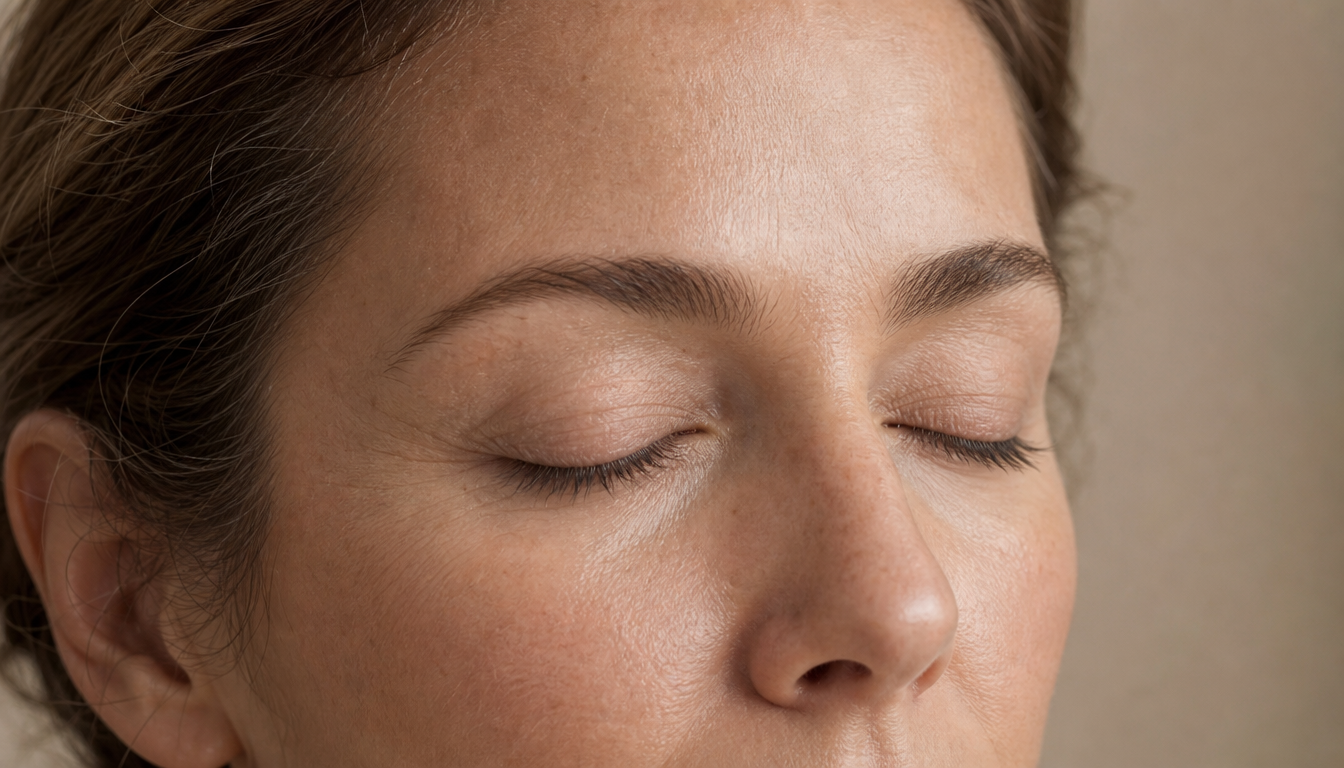
It is the question almost everyone asks before buying an LED face mask and almost no brand answers properly: is it safe for my eyes? You are putting bright light close to your face, right over the delicate eye area, so the worry is reasonable. Here is a straight answer, based on what the research actually says.
The short answer
For the red and near-infrared wavelengths used in skin devices, the evidence points to LED face masks being safe for the eyes when used as directed, with eyes gently closed. The wavelengths themselves are non-ionising, meaning they do not carry the kind of energy that damages tissue the way UV does. In fact, the same red and near-infrared wavelengths are being studied as therapies for the eye. But safe when used as directed carries some important detail, so let us go through it.
Why the eye question is legitimate
Your retina is far more light-sensitive than your skin, so it is right to treat it with more caution. Two points are worth understanding. First, near-infrared light (around 850nm) is invisible, so your pupils do not constrict and you do not get the natural blink-and-squint reflex that protects you from bright visible light. Second, LED masks sit only a centimetre or two from your face, which is much closer than a panel across the room. Neither of these makes a well-designed mask dangerous, but they are exactly why manufacturer instructions and eye-protection guidance exist, and why you should follow them.
What the research says
A 2024 review in the ophthalmology literature notes that red and near-infrared photobiomodulation is itself being investigated as a treatment for certain eye conditions, at similar wavelengths to those used in skin devices. Reviews of low-dose red light used directly for other purposes have not found evidence of permanent vision loss at these exposures. And a 2026 dermatology review of consumer LED masks confirms that red (around 620 to 700nm) and near-infrared wavelengths are the standard, with the important caveat that consumer devices run at lower output than clinical systems. The consistent message across sources, including the American Academy of Dermatology's guidance, is to follow the manufacturer's instructions on eye protection rather than improvise.
The blue-light caveat
The wavelength that warrants the most caution is not red or near-infrared, it is blue. Blue light (roughly 400 to 500nm) carries more energy and is the one most often flagged for potential retinal stress if the eyes are exposed without protection. If a mask has a blue mode, keep your eyes closed and follow the eye-protection guidance closely. The Lumovex Spectrum Pro Mask does not rely on blue for its core skin wavelengths: it uses green 525nm, yellow 590nm, red 660nm and near-infrared 850nm across its 328 LED points.
How the mask is built matters
Not all masks handle the eyes the same way. The Lumovex Spectrum Pro Mask uses a single open visor across the eye area rather than blacking it out, so you can see through it and are not sat in total darkness during a session, while the visor still sits between the LEDs and your eyes. The simplest, sensible practice with any LED mask is the one the research supports: keep your eyes gently closed during treatment, and follow the instructions that come with the device.
Why the trust question is bigger than it looks
In May 2026 the UK's Advertising Standards Authority banned adverts from several LED mask brands for making unauthorised medical claims, such as promising to cure acne and rosacea, because under UK law those claims are reserved for licensed medical devices. It is a useful reminder. The technology is genuinely interesting, and photobiomodulation has real, well-studied biology behind it, but the category has a marketing problem, not a science problem. That is exactly why responsible language matters: we say red light may help support collagen and skin firmness, not that it cures or eliminates anything, and we publish our actual specifications rather than overstate them. A brand that is careful with its claims about your skin is more likely to be careful with its guidance about your eyes.
Practical eye-safety checklist
- Keep your eyes gently closed during every session.
- Follow the manufacturer's instructions on eye protection for your specific device.
- Take extra care with any blue-light mode.
- If you have an existing eye condition, are on photosensitising medication, or have recently had eye surgery, check with your doctor before starting.
- Do not stare directly into the LEDs, especially near-infrared, which you cannot see.
The bottom line
For the red and near-infrared wavelengths that do the skincare work, LED face masks are considered safe for the eyes when used as directed, with eyes closed. Treat blue light with more caution, follow the instructions your device comes with, and choose a brand that is honest about both its claims and its build. Do that, and eye safety stops being a reason to hesitate. If you want to compare the specifications side by side, our best-selling LED face masks publish their full wavelengths and LED counts openly, and our best LED face mask UK 2026 guide ranks ten leading masks side by side on price, LED count and wavelengths. And if you are still deciding which type of device suits you, our best red light therapy devices UK 2026 guide compares masks, panels, belts and mats side by side.
Frequently asked questions
Do I need to close my eyes during an LED mask session?
Yes. Keeping your eyes gently closed is the simplest, research-supported precaution, and you should also follow your device's specific eye-protection instructions.
Is near-infrared light safe for the eyes?
Near-infrared at the doses used in skin devices has not been linked to permanent vision loss in the literature, and similar wavelengths are being studied as eye therapies. Because it is invisible and does not trigger your blink reflex, do not look directly into the LEDs.
Which wavelength is the most concerning for eyes?
Blue light carries the most energy and warrants the most caution. Red and near-infrared are lower risk, but eye-protection guidance still applies.
Can I wear an LED mask if I have an eye condition?
Check with your doctor first if you have an existing eye condition, have had recent eye surgery, or take medication that increases light sensitivity.




Leave a comment
This site is protected by hCaptcha and the hCaptcha Privacy Policy and Terms of Service apply.