

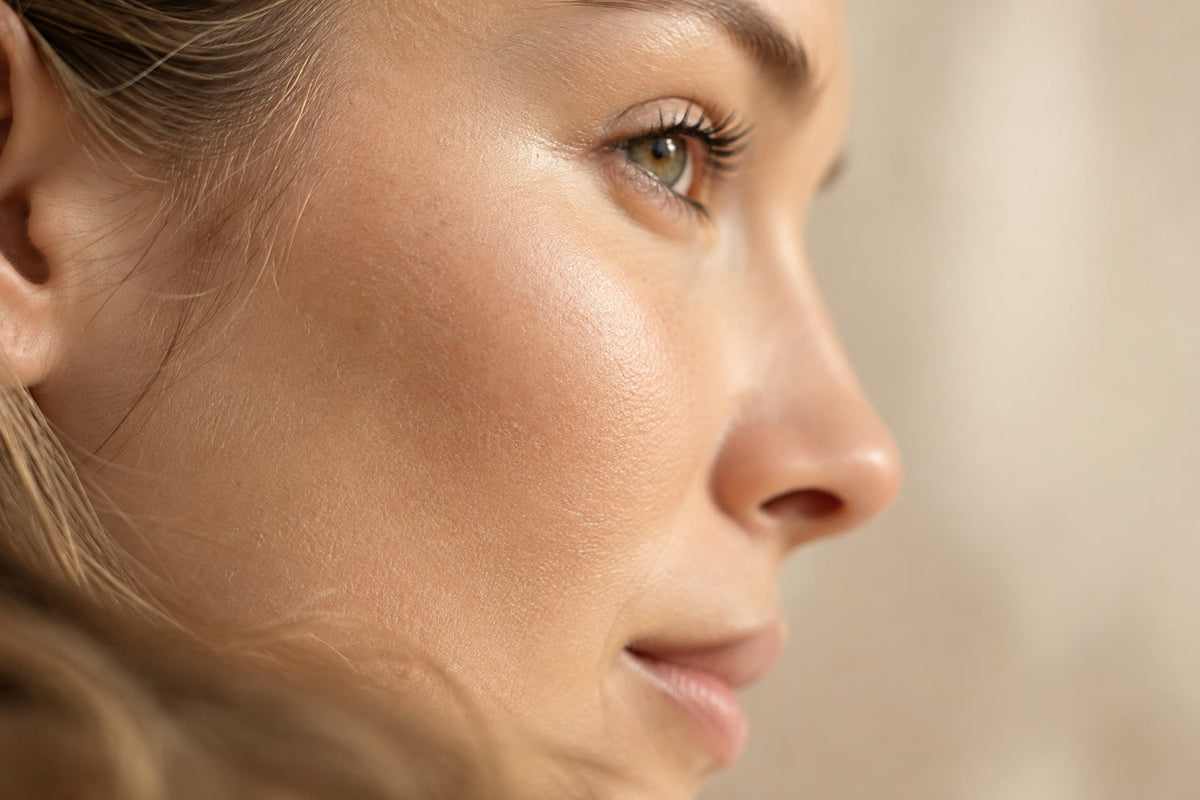
Does red light therapy shrink pores? Not literally. Pore size is largely set by genetics, oil production and age, and no LED device can make a pore smaller in a lasting, structural way. What light may do is support the skin around pores so they look less prominent over time, and early lab research suggests certain wavelengths may influence oil-producing cells. The evidence for pores specifically is thin, so treat red light as a supporting player alongside sensible skincare, not a fix.
Contents
- What pores actually are (and what changes their appearance)
- What the research says about light and oil production
- Where red light may help the look of pores
- What it won't do
- A realistic routine for oily skin and pores
- Which LED mask mode to use
- FAQ
What pores actually are (and what changes their appearance)
Pores are the openings of hair follicles, each connected to a sebaceous gland that produces sebum, the skin's natural oil. You can't open or close them. What changes is how visible they look, and that depends mainly on four things:
- Sebum production. More oil tends to stretch the follicle opening and makes pores look larger, which is why they're most noticeable on the nose, forehead and cheeks.
- Congestion. Dead skin and oil sitting in the pore make it look darker and wider.
- Firmness around the pore. As collagen declines with age, the skin around the opening loses support and pores can look more pronounced.
- Sun damage. UV exposure can thicken the skin surface and roughen texture.
That list is useful because it shows where light could plausibly play a role (oil, firmness, texture) and where it can't (the follicle structure you were born with, or deep congestion).
What the research says about light and oil production
The most direct evidence is laboratory-based. A 2015 study on human sebocytes (the cells that make sebum), published in Archives of Dermatological Research, tested 415nm blue light and 630nm red light. Blue light slowed the growth of those cells, while 630nm red light strongly reduced the amount of oil (lipid) they produced. That's interesting, but it was cells in a dish, not people using a mask, so it can't tell us what happens on your face.
Human trials have mostly looked at acne rather than pores. A 2025 systematic review and meta-analysis in JAMA Dermatology pooled six randomised trials of at-home red and/or blue LED devices for acne. It is a useful summary, but six trials is still a small evidence base. Our guides on red light therapy for acne and the clinical evidence for acne go through those trials in more detail.
For pores themselves, a 2019 randomised split-face trial in the Journal of Dermatological Treatment tested broadband light, a type of clinic intense pulsed light, on enlarged facial pores. Two months after the last session, pore counts on the treated side were not significantly different from the untreated side, although the authors described the result as mildly effective. That was a professional machine, not a home LED mask, so it doesn't show a mask will change how pores look.
A small 2023 study of another brand's 630nm red LED mask (20 women, no control group, run by the mask's makers) also tracked pore diameter and sebum over three months and reported improvements, though without a comparison group it can't show the mask caused them.
The fair summary: there's a plausible link between certain wavelengths and sebum, and professional light devices have been tested on pore appearance, but there are no strong trials of home red light masks for pore size.
Where red light may help the look of pores
The better-supported benefit is on firmness and texture. Studies of red LED light on facial skin have reported improvements in roughness, collagen density and the look of fine lines after several weeks of regular use. For example, a 2023 study in Skin Research and Technology used a 630nm red LED mask twice a week for three months and reported improvements in visible signs of skin ageing. We cover the mechanism in red light therapy and collagen.
If skin becomes firmer and smoother, pores can look less noticeable as a side effect. That is a gradual, modest change, typically judged over 8 to 12 weeks, and it varies from person to person.
What it won't do
- It won't physically shrink or close pores.
- It won't unblock a congested pore. Cleansing and exfoliating ingredients do that job.
- It won't override genetics or hormones. If your oiliness is hormonal, light is at best a small supporting factor.
- It won't replace medical advice for persistent or inflamed acne. See a GP or pharmacist if your skin is painful or scarring.
A realistic routine for oily skin and pores
- Cleanse well. Use a gentle cleanser before each session so oil and make-up aren't sitting between the light and your skin.
- Use your LED mask 3 to 5 times a week. Follow the device's session length and give it at least 8 weeks before judging. See how often to use red light therapy.
- Apply lightweight, non-comedogenic products afterwards. Gel moisturisers and hydrating serums suit oily skin. Our guide to what to apply after red light therapy has ideas.
- Add a pore-friendly active, carefully. Salicylic acid (BHA) and niacinamide are common choices for congestion and oil. If you use retinol too, read can you use red light therapy with retinol first.
- Wear SPF every morning. Sun damage roughens texture and undoes progress.
If your skin is easily irritated, our guide to red light therapy for sensitive skin explains why light tends to be gentler than strong actives.
Which LED mask mode to use
The Spectrum Pro LED Face Mask has 328 LEDs and four modes, each using one wavelength:
- Rejuvenate (red 660nm): the mode for firmness, texture and the look of fine lines, and the one most relevant to pores over time.
- Calm (green 525nm): often chosen for skin that looks flushed or feels reactive.
- Brighten (amber 590nm): for a more even-looking tone.
- Deep Repair (near-infrared 850nm): deeper-reaching light, used in comfort and recovery-style routines.
For pores and oily skin, most people start with Rejuvenate and rotate other modes in. Our guide to what each LED mask colour does shows how strong the evidence is for each. The Spectrum Pro doesn't include a blue light mode, so if breakouts are your main concern, read our comparison of red light vs blue light therapy first.
The bottom line
Red light won't shrink your pores, but it may help the skin around them look firmer and smoother over a couple of months, which can make pores less noticeable. Pair it with good cleansing, a light moisturiser and daily SPF. The Spectrum Pro LED Face Mask is £149.99 with 30-day returns and a 2-year warranty, and the Mask + Neck set is £194.99 if you want to include your neck.
Frequently Asked Questions
Does red light therapy shrink pores?
Not directly. Pores can't be opened or closed. Red light may support collagen and skin texture, which can make pores look less prominent over weeks of regular use, but the evidence for pore size specifically is limited.
Can red light therapy reduce oily skin?
A 2015 lab study found 630nm red light reduced oil production in sebum-making cells, but that was cells in a dish. There are no strong human trials showing a home LED mask reduces oiliness, so treat any effect as a possible bonus.
Is red light therapy good for large pores on the nose?
The nose has the densest oil glands, so pores there are naturally the most visible. Red light may help overall texture, but a gentle cleansing routine and a BHA product usually do more for congestion.
How long until I notice a difference in my pores?
Most studies judge skin texture after 8 to 12 weeks of regular use. Changes in how pores look, if any, are gradual and modest.
Is red or blue light better for oily skin?
Blue light is the colour most associated with acne-prone skin, and red light has more evidence for texture and firmness. Many acne devices combine the two. The Spectrum Pro has no blue mode and is aimed at texture, tone and firmness rather than breakouts.
Can I use an LED mask on oily or acne-prone skin?
Generally yes, on clean skin. If your acne is inflamed, painful or scarring, speak to a GP or pharmacist before starting, and check our safety guide for who should avoid light devices.



Leave a comment
This site is protected by hCaptcha and the hCaptcha Privacy Policy and Terms of Service apply.