Spend any time in red light therapy communities and you'll encounter this question constantly: do I need full-body coverage, or is targeted treatment enough?
It's not just an academic question. Full-body setups cost more, take up more space, and require longer sessions. Targeted devices are more affordable and convenient but cover less area. The answer depends on what you're actually trying to achieve, and the science is clearer than the marketing suggests.
How Red Light Therapy Actually Works
Red and near-infrared light (630 to 670nm and 810 to 850nm) penetrate your skin and are absorbed by the mitochondria in your cells. This supports increased ATP (cellular energy) production, reduced oxidative stress, and various downstream effects including support for collagen synthesis, tissue repair, and a healthier inflammatory response.
The key point: these effects happen mainly in the cells that actually receive the light. This is local therapy with some systemic effects, not the other way around. That single fact is what decides the full-body versus targeted question.
When Targeted Treatment Makes Complete Sense
For many goals, you simply don't need full-body coverage.
Facial Skin Health
Collagen production, fine lines, and skin texture are concerns specific to your face. A quality LED mask like the Lumovex Spectrum Pro Mask delivers high-output wavelengths directly where you need them. Treating your whole body does not make your face treatment any more effective. If you also want to cover the neck and decolletage, the Spectrum Pro Mask + Neck extends the same coverage.
Specific Muscle Groups
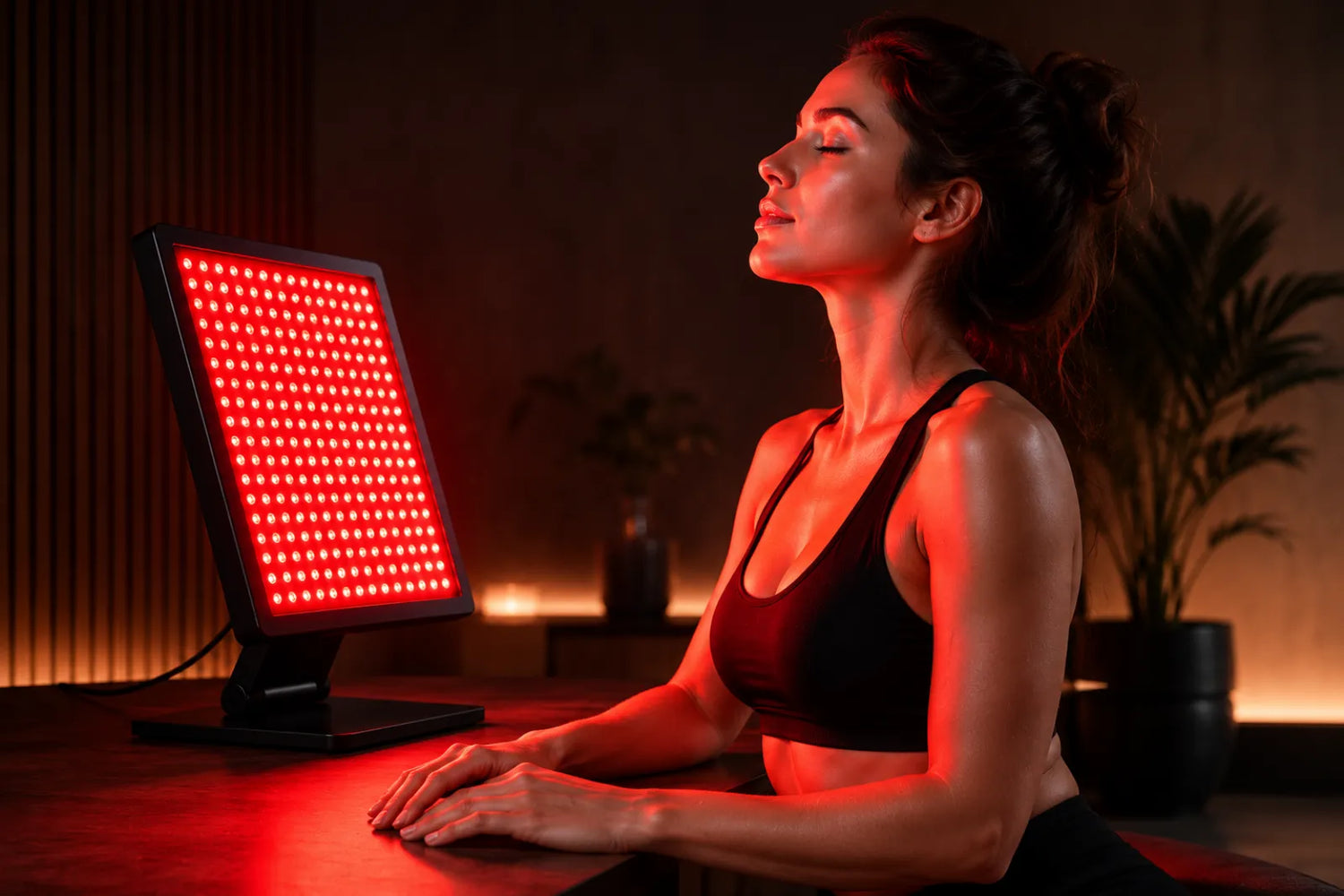
Targeting your quads after leg day, or your shoulders after pressing? Focused treatment on the worked muscles makes sense. The Pro Panel 540 is well suited to targeted muscle work, and the compact Portable Panel is easy to aim at one area. Not sure which panel suits you? Our best red light therapy panel UK 2026 guide compares the options on power, coverage and price.
Joint Support
Knees, elbows, and shoulders all benefit from direct application. The Lumovex Belt wraps around the lower back and core, while the Wrist Strap handles wrists and forearms hands-free. There's no advantage to exposing your entire body when the goal is supporting one joint.
When Full-Body Coverage Makes Sense
General Recovery and Systemic Effects
Some research suggests photobiomodulation may have systemic effects beyond the locally treated tissue. For athletes focused on overall recovery rather than one muscle group, full-body sessions mean treating everything at once. The Total Recovery Mat provides comprehensive coverage for full-body sessions while you lie down.
Time Efficiency
If you want to treat several areas (face, chest, legs), doing them one at a time with a small device takes longer than one session with a larger panel or mat.
The Dose Question
Here's something marketing often glosses over: coverage and dose are inversely related for a given device. If a panel delivers a certain total power output, spreading that across more surface area means less power per square centimetre. A smaller device held close to your face may deliver a higher effective dose than standing further from a large panel. In other words, bigger is not automatically more powerful where it counts.
So What Do You Actually Need?
| Goal | Recommendation |
|---|---|
| Facial skin health | Spectrum Pro Mask |
| Post-workout muscle recovery | Pro Panel 540 |
| Specific joint support | Belt or Sculpt Wand |
| Full-body recovery | Recovery Mat |
| Face and body together | Complete Glow Kit |
| Convenience and daily habit | Whatever device you'll consistently use |
Frequently Asked Questions
Is full-body red light therapy better than targeted?
Not inherently, just different. Many benefits are highly localised, so for a single concern like facial skin or one joint, a targeted device is just as effective and more convenient. Full-body coverage wins when you want to treat several areas or pursue general recovery.
Can a face mask treat my body too?
No, a mask is shaped for the face. For the body you want a panel, belt, wrap, or mat. If you need both, the Lumovex bundles and kits pair complementary devices.
Will a bigger panel always give faster results?
Not necessarily. Because dose is power spread over area, a large panel used at distance can deliver less energy per area than a smaller device held close. Match the device to the area you actually want to treat.
Should beginners start full-body or targeted?
For most people, starting targeted around their main goal is simpler, more affordable, and easier to stay consistent with. You can always add full-body coverage later.
The Bottom Line
Full-body coverage isn't inherently better than targeted treatment, it's different. Many benefits are highly localised to the skin, specific muscles, or joints. Your goals, space, budget, and commitment to consistency should drive the decision. The best red light therapy device is the one you'll actually use, and for most people that means starting focused and building from there.




Leave a comment
This site is protected by hCaptcha and the hCaptcha Privacy Policy and Terms of Service apply.