

Updated October 2026. Now with a price comparison of 10 panels sold to UK buyers.
Red light therapy panels have gone from niche biohacker kit to a mainstream part of home wellness routines. That is good news, but it also means the UK market is now crowded with panels that range from under £100 to well over £1,000, all making broadly similar promises. This guide cuts through it. Here is what genuinely matters when you choose a red light therapy panel in 2026, what to ignore, and how to work out which one fits your goal and your budget.
The five things that actually matter
Marketing pages love long spec sheets. In practice, only a handful of things change the experience you get. Focus on these.
1. Wavelengths: look for 660nm and 850nm together
The two most studied wavelengths for at-home use are red light at around 660nm and near-infrared at around 850nm. Red light works nearer the surface and is associated with skin tone and texture, while near-infrared reaches deeper tissue and is more often linked with recovery and joint comfort. A panel that runs both wavelengths in the same session covers surface and deeper concerns without you swapping devices. If a panel only offers one wavelength, you are getting half the toolkit. Extra wavelengths like blue or green can be useful for specific skin concerns, but 660nm plus 850nm is the core combination most people should start with.
2. Coverage area matched to your goal
A panel is only useful if it covers the area you actually want to treat. A compact panel is perfect for the face, a shoulder or a knee, but it will take a long time to work across your back. A large standing panel covers more of the body at once but needs floor space and a bigger budget. Be honest about what you are treating most days. Most people want face plus a couple of recovery zones, which a mid-size standing panel handles comfortably from 15 to 30 cm away.
3. Real irradiance, not the number on the box
Irradiance is the power delivered to your skin, and it is the single most exaggerated number in this category. Independent testers have repeatedly found that advertised irradiance figures can be inflated by a wide margin compared with measured output, because brands quote the reading at the panel surface rather than at a realistic treatment distance. Treat any headline irradiance claim with caution. A sensible session distance, consistent use and the right wavelengths matter far more than a big number you cannot verify.
4. Build, controls and warranty
You want a panel that is quiet, simple to operate and built to last, because the best device is the one you will actually use several times a week. Look for a clear timer, a stable stand or mount, and cooling that is not distractingly loud. Check the warranty too. A 1-year warranty with genuine UK-based support is far more reassuring than a longer warranty from a brand that is hard to reach.
5. Price, and what you are really paying for
This is where the UK market splits most sharply. Premium modular systems from brands like Joovv and Mito Red Light typically start well over £1,000 once shipping and import costs land, and they are built for buyers who want a large, expandable, floor-to-ceiling setup. At the other end, there are large budget panels that compete hard on wattage but often skimp on support and consistency. In the middle sits the sweet spot for most people: a genuine dual-wavelength panel at a sensible price, backed by real support. You do not need to spend four figures to run 660nm and 850nm at home.
The UK panel market in 2026, honestly
It helps to think in three categories rather than one long list.
Premium imports (£1,000 and up). Joovv, Mito Red Light and PlatinumLED dominate the top tier. They offer large modular coverage, verified irradiance and long track records. If money is no object and you want a full-body wall of light, they are the reference point. For most home users, though, they are more panel than the routine requires, and the price reflects a US import market rather than UK value.
Large budget panels. A wave of high-wattage panels now competes on raw numbers at lower prices. Some are decent, but this is the category where inflated irradiance claims and thin after-sales support are most common. Read the warranty and support terms carefully before you buy on wattage alone.
Compact and mid-size dual-wavelength panels. This is where most sensible buyers land: a panel that runs 660nm and 850nm, covers the areas you use most, and costs a fraction of the premium tier. The goal here is balance, not bragging rights.
Red light therapy panel price comparison UK (October 2026)
Ten of the panels UK buyers ask about most, from compact to full-body, with prices taken from each brand's own store:
Swipe the table sideways to see every column.
| Panel | Price | Wavelengths | Format | Warranty |
|---|---|---|---|---|
| Lumovex Portable Panel | £99.99 | 660 + 850nm | Handheld, rechargeable | 2 years |
| Lumovex Pro Panel 540 | £149.99 | 660 + 850nm | Standing panel with stand | 2 years |
| Hooga HG300 | £149 (Amazon UK) | 660 + 850nm | Small panel | 3 years |
| Mito MitoMIN 2.0 | about £189 (US store) | 660 + 850nm | Small panel | 2 years |
| Kala Red Light Pro Panel | £489.99 | 660 + 850nm | Mid-size panel | 2 years |
| Bon Charge Demi | £499 | 660 + 850nm | Half-body panel | 1 year |
| PlatinumLED BIOMAX 300 | £499.95 | 7 wavelengths (480-1060nm) | Small panel | 3 years |
| Red Light Rising Half Stack 3.0 | £599 (sold out) | 630, 660, 810, 850nm | Mid-size panel | 3 years |
| CurrentBody LED Panel | £899.99 | 415, 633, 830, 1072nm | Flexible full-body panel | Not stated |
| Joovv Solo 3.0 | $1,799 (US only) | 660 + 850nm | Mid-size panel | 2 years |
Prices checked on 23 October 2026 on each brand's store (Amazon UK for Hooga). Mito, PlatinumLED and Kala are US brands whose stores convert to pounds; Joovv only sells in dollars, and UK buyers pay import duties on delivery. Prices change with promotions.
We have left LED counts out on purpose. A 5W chip and a 0.5W chip both count as one LED, so a bigger number does not mean more light. If light output matters to you, ask for measured irradiance at a stated distance, and compare warranties: several premium panels now offer three years.
Where the Lumovex panels fit
Lumovex sits deliberately in that middle category, built for people who looked at the £1,000 imports and wanted the same core wavelengths without the four-figure price.
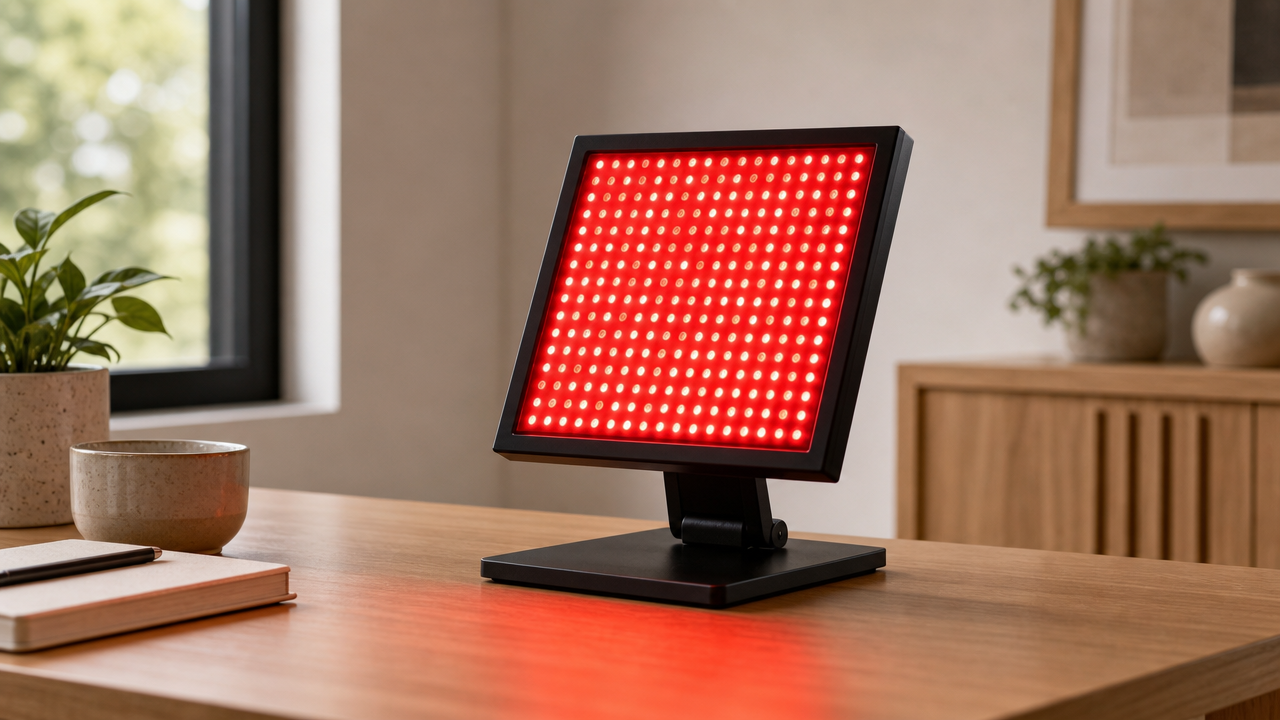
The Pro Panel 540 is a standing panel with 289 dual-wavelength LEDs, made up of 145 red LEDs at 660nm and 144 near-infrared LEDs at 850nm. You use it from 15 to 30 cm away for 10 to 15 minutes per area, three to five times a week, and it covers face, shoulders, back and joints from a single stand or door hook. At £149.99 it is designed to give you the two wavelengths that matter, in a proper standing format, for roughly a tenth of what a premium modular system costs. It is CE Certified and comes with a 2-year warranty, 30-day returns and UK-based support.
If you travel, rent, or simply do not have room for a standing panel, the Portable Panel runs the same 660nm and 850nm wavelengths in a compact, USB-C rechargeable device at £99.99. It is built for targeted areas and travel weeks rather than full-body sessions, and many customers own both: one for the home routine, one for the road.
Which panel for which goal
Panels are not the only way to get red light at home, and matching the format to your main goal saves money.
Mostly your face? A hands-free mask is often the easier choice. The Spectrum Pro Mask is purpose-built for the face and lets you move around during a session, which a panel cannot.
Full-body recovery lying down? A large flexible mat you lie on top of can be more comfortable than standing in front of a panel. The Total Recovery Mat covers a large area from head to thighs while you rest.
Face plus a couple of recovery zones? This is the classic panel use case, and where the Pro Panel 540 earns its place. One device, two wavelengths, most of your body reachable from a single spot.
How to get results from any panel
Whichever panel you choose, the fundamentals are the same. Use bare skin where you can, since makeup, sunscreen and heavy moisturisers sit between the light and your skin. Keep to the recommended distance rather than pressing right up against the panel. Aim for short, regular sessions of around 10 to 15 minutes per area, several times a week, and give it 8 to 12 weeks. Red light therapy is a consistency tool, and steady routine beats occasional long sessions every time.
Frequently asked questions
What is the best red light therapy panel in the UK?
There is no single best panel for everyone. The best panel for you is the one that runs 660nm and 850nm, covers the areas you treat most, and fits your budget and space. Premium imports suit buyers who want maximum full-body coverage and can spend over £1,000, while a mid-size dual-wavelength panel like the Pro Panel 540 suits most home users at £149.99.
How many wavelengths do I need?
For most people, red at 660nm and near-infrared at 850nm is the core combination. Red supports the skin surface, near-infrared reaches deeper tissue for recovery and comfort. Additional wavelengths can help specific concerns but are not essential to start.
Are cheap red light panels any good?
Some are, but price is where inflated irradiance claims and weak support show up most. Check that the panel genuinely runs both wavelengths, read the warranty, and confirm there is real support behind it rather than buying on a single big wattage number.
How far should I sit from a panel?
For a standing panel, 15 to 30 cm is typical: closer for smaller areas like the face, a little further back for larger zones. For a compact handheld panel like the Portable Panel, hold it closer, about 5 to 10 cm.
How long until I notice a difference?
Most people using a panel consistently notice gradual changes over 8 to 12 weeks. Results vary by individual, and steady use matters more than long single sessions.
If you have weighed up the premium imports and want the same core wavelengths without the four-figure price, the Pro Panel 540 is where most UK buyers will get the best balance of coverage, wavelengths and value.




Leave a comment
This site is protected by hCaptcha and the hCaptcha Privacy Policy and Terms of Service apply.