The phrase "red light therapy wound healing" pulls thousands of searches every month, and that interest is not the work of marketing teams. The link between specific wavelengths of light and the skin's natural recovery process has been studied for decades, starting in NASA laboratories. The science is genuinely interesting. The wellness industry's framing of it is often overheated.
This article sits in the middle of those two extremes. We will explain what the research actually shows about red light therapy and wound healing, which wavelengths matter, what at-home devices can realistically support, and where the honest limits sit. No miracle language. No "heals in days" claims. Just the science as it currently stands.
What "Wound Healing" Actually Means
Before we get to the light side of things, it helps to understand how the skin recovers in the first place. The body moves through four overlapping phases whenever the skin is damaged, whether from a small cut, a procedure like microneedling, or post-surgical incisions.
Phase 1: Haemostasis. This is the first few minutes. Blood vessels narrow, platelets clump together, and a clot forms to stop bleeding.
Phase 2: Inflammation. Over the next several days, white blood cells move into the area to clear debris and reduce the risk of infection. Redness and swelling are normal here, not a sign of failure.
Phase 3: Proliferation. This is where new tissue is built. Fibroblasts (the cells that produce collagen) get to work, tiny new blood vessels form, and the wound starts to close from the edges inward. This phase can last from days to several weeks.
Phase 4: Remodelling. The longest phase. Collagen fibres are reorganised and strengthened, and the new tissue gradually matures. This can run for months or even more than a year, especially for surgical scars.
Each phase relies on cellular energy. And that is the part of the picture where red light enters the conversation.
How Red Light Interacts With Skin Cells
The mechanism most often discussed in the photobiomodulation literature involves a molecule called cytochrome c oxidase. It sits inside the mitochondria, the energy factories of every cell in the body. Specific wavelengths of red and near-infrared light appear to be absorbed by this molecule, which may help the mitochondria produce more adenosine triphosphate (ATP), the cellular energy currency.
In simple terms: cells with more available energy may carry out their normal repair tasks more efficiently. That includes the fibroblast activity that drives collagen production, which is central to the proliferation and remodelling phases of skin recovery.
This is not a claim that red light "heals" anything on its own. The body does the healing. The proposed role of red light therapy is to support the cellular conditions that allow the body's own recovery machinery to work.
What the Research Actually Shows
The field of photobiomodulation has its origins in NASA-funded research on plant growth and tissue repair in microgravity. Since then, peer-reviewed studies have explored red and near-infrared light in contexts ranging from post-surgical recovery and oral mucositis to sports injury rehabilitation and skin appearance.
A few honest observations about that body of research:
- Most rigorous studies use purpose-built clinical-context devices under clinical supervision, with specific protocols (wavelength, dose, distance, duration). At-home devices are not held to the same parameters.
- Effect sizes vary widely. Some studies show meaningful improvement; others show no significant difference vs sham treatment. Systematic reviews tend to find a modest but real signal, rather than dramatic outcomes.
- The strongest evidence sits around skin appearance and post-procedure recovery, not deep or complex wounds, which always require medical care.
- Self-reported outcomes in user trials tend to be more positive than objective measurements, which is a useful reminder that placebo and ritual matter in any skincare routine.
This is why responsible brands hedge their language. "May help support" is not weasel-wording. It is the appropriate description of an effect size that is real but moderate, and dependent on consistency.
Which Wavelengths Show Up Most in the Research
Two wavelength ranges appear most often in the photobiomodulation literature, and they do different things.
Red light, roughly 630 to 660 nanometres. This range is absorbed mostly by the epidermis and upper dermis, the surface layers of the skin. It is the wavelength most associated with skin appearance, fine lines, and surface tone.
Near-infrared light, roughly 800 to 850 nanometres. This range penetrates deeper, reaching into the dermis and subcutaneous tissue. It is the wavelength most associated with deeper recovery, muscle and joint comfort, and post-exercise repair.
This is why many devices combine the two. Surface skin work happens in the upper layers. Recovery support for muscle, tendon, or deeper tissue requires the longer wavelengths. Neither one is "better"; they target different depths.
What Red Light Therapy May Support, Beyond the Word "Wound"
Most people searching for "red light therapy wound healing" are not bandaging serious injuries at home. They are usually thinking about one of the following:
- Post-procedure recovery. After microneedling, chemical peels, or laser treatments, the skin is in an active repair state. Several aesthetic clinics now use red light therapy after these procedures to support the recovery phase.
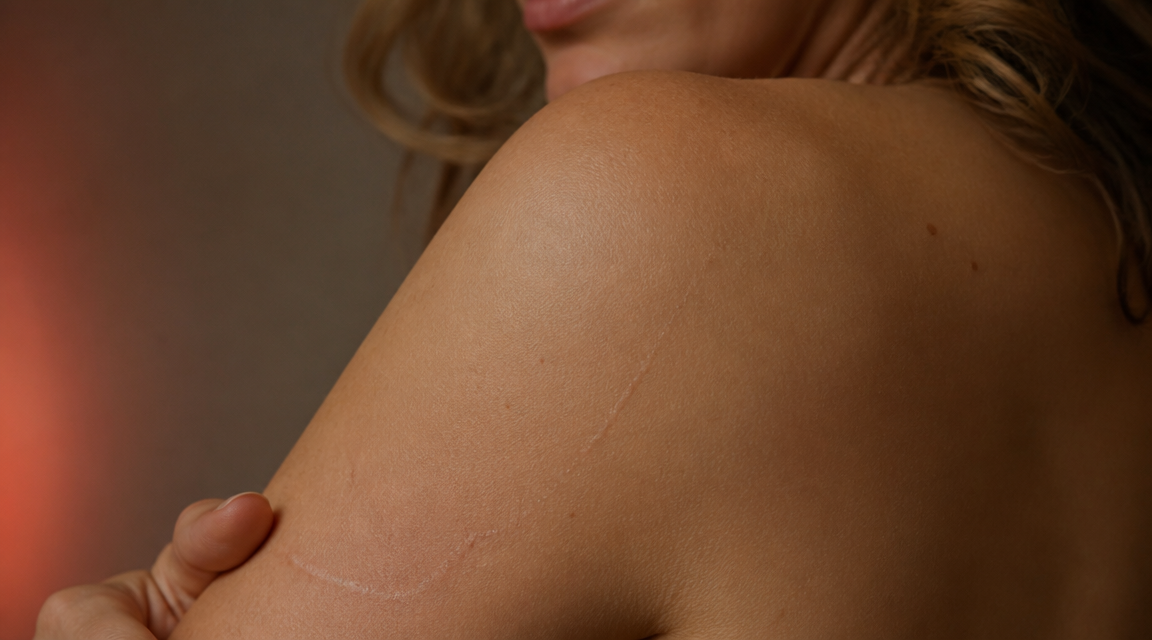
- Surgical scar appearance. Some studies have looked at red and near-infrared light in the months after surgery, focusing on the colour, texture, and pliability of scar tissue during remodelling.
- Sports injury comfort. Strains, sprains, and overworked tendons sit in this same recovery framework. Athletes use near-infrared therapy to support the comfort and recovery of soft tissue.
- Acne lesion appearance. Inflammation and post-inflammatory marks are an active area of research for red light specifically.
- Sun-damaged skin. The body's repair response to UV damage shares mechanisms with general wound healing, which is why red light therapy is often discussed alongside post-sun recovery.
The honest framing for all of these is the same: red light may help create supportive conditions for the body's recovery process. It is not a replacement for medical care, and it works best as part of a consistent routine, not a one-off session.
At-Home Devices vs Clinical Settings: What's Realistic
A clinical photobiomodulation device sits within a very specific dosing window. Power density, distance, session length, and frequency are all controlled. At-home devices vary widely.
A few principles hold up well in the home-use literature:
- Consistency matters more than session length. Ten minutes a day, four to five times a week, beats one long session a week.
- Distance from the skin affects the dose. Closer is not always better; manufacturer guidance exists because dose-response curves can plateau or reverse.
- Diminishing returns are real. More time is not more results. Most studies on at-home use settle around 10-20 minute sessions.
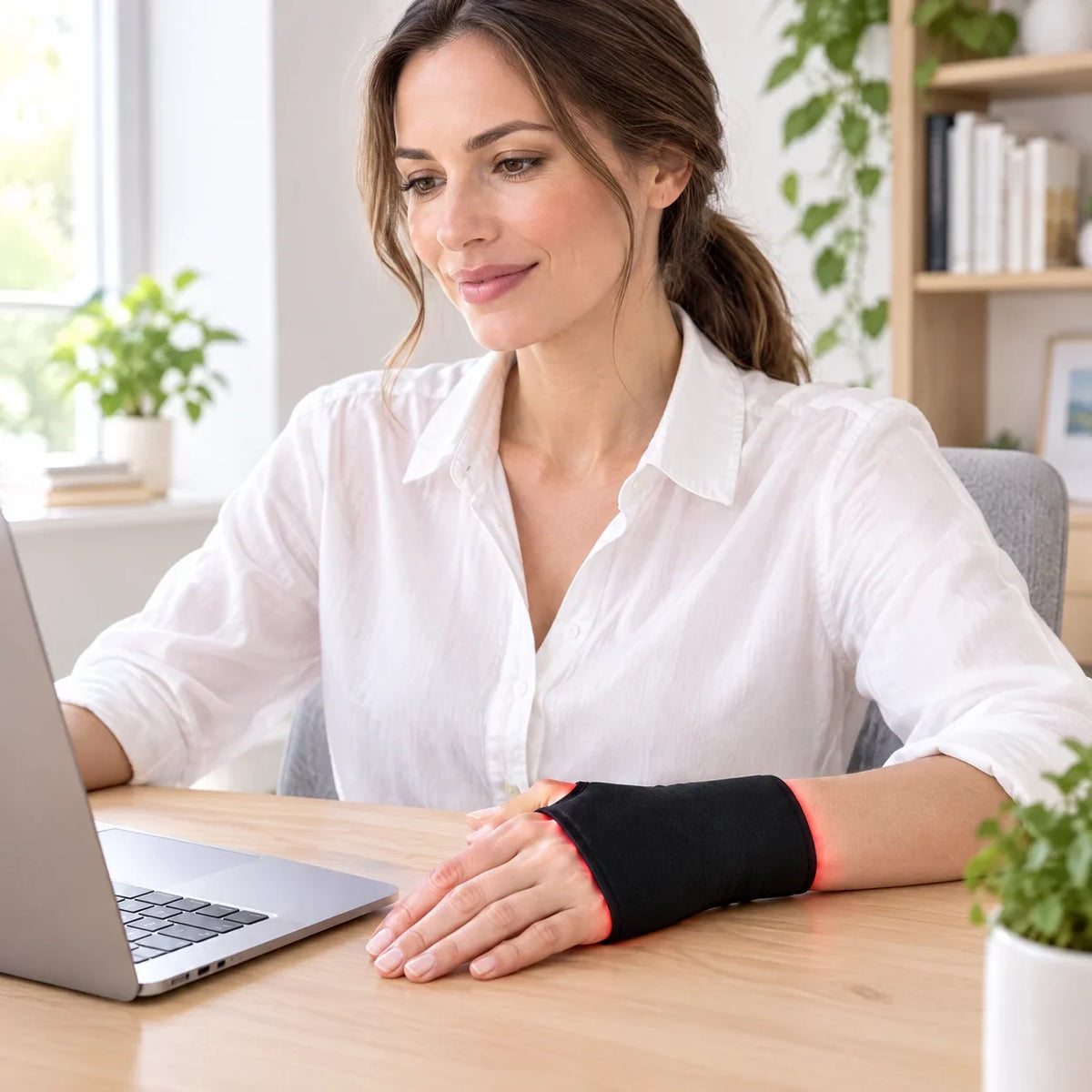
For the face and neck, mask-style devices (like the Spectrum Pro LED Face Mask) are designed around the geometry of close, even exposure. For larger or deeper areas of the body, panel-style devices cover more surface at a working distance. For targeted areas like the lower back, abdomen, or joints, wraparound belts keep the light in direct contact with the skin.
The right device depends on what part of the body you are focused on, not on which one has the most LEDs.
When Red Light Therapy Is Not Appropriate
This part matters as much as the science.
- Active, deep, or non-superficial wounds belong with a clinician. Do not treat a wound at home with any light therapy.
- Diabetic ulcers and pressure sores require specialist supervision. Photobiomodulation is sometimes used in those settings, but only as part of a medical plan.
- Open or infected wounds should not be treated at home with any device.
- Suspected or diagnosed skin cancers are a hard no for any non-medical light therapy.
- Active autoimmune skin flares (lupus, severe eczema with broken skin) should be reviewed with a dermatologist first.
- Pregnancy. Although there is no specific evidence of harm, the data is limited. Speak to a doctor first.
- Photosensitising medications. Some antibiotics, retinoids, and other drugs increase light sensitivity. Check with a pharmacist.
This is not legal small print. It is the honest line where home wellness ends and medical care begins.
Frequently Asked Questions
Does red light therapy speed up wound healing?
Some research suggests red and near-infrared light may help support the cellular activity involved in the skin's natural recovery process. Effect sizes are modest and depend on consistency. It is not a replacement for medical care for serious wounds.
Can red light therapy fade scars?
Studies on surgical and post-procedure scars have looked at red and near-infrared light during the remodelling phase. Some show improvement in scar appearance, colour, and pliability. Results vary and tend to build over weeks rather than days.
How long does it take to see results?
Most consistent users describe noticing changes in the appearance of their skin within 4 to 8 weeks of daily or near-daily use. Recovery-focused use (post-procedure, sports) often sees feedback sooner because the comparison window is shorter.
Is red light therapy safe to use after surgery?
Always ask your surgeon first. Some clinics use red light therapy as part of post-procedure protocols, but the timing and approach depend on the surgery, the wound, and your medical history. Never apply light therapy directly over an open wound at home.
What is the difference between red light and near-infrared light?
Red light (around 630-660nm) is absorbed mostly by surface skin layers and is associated with skin appearance. Near-infrared light (around 800-850nm) penetrates deeper and is associated with recovery in muscle, tendon, and deeper tissue.
Can you overdo red light therapy?
Yes, in the sense that more is not better. Most home-use research settles around 10-20 minute sessions, 4 to 5 times a week. Going significantly longer or more often is unlikely to add benefit and may cause skin to feel temporarily warm or dry.
The Bottom Line
The link between red light therapy and the skin's natural recovery process is one of the more well-supported areas in the photobiomodulation literature. The mechanism is plausible, the research is real, and the results, while modest, are consistent enough to take seriously.
What red light therapy is not, is a shortcut. The body still does the recovery. Specific wavelengths may help create the conditions that allow it to happen more efficiently, especially when used consistently as part of a wider skincare and recovery routine.
If you are post-procedure, recovering from a sports niggle, or simply trying to support your skin's ability to repair itself over time, red light therapy is a reasonable, science-backed addition to a routine. If you are looking at an active wound, go and see a doctor first. The two answers can both be true at the same time.


Leave a comment
This site is protected by hCaptcha and the hCaptcha Privacy Policy and Terms of Service apply.