

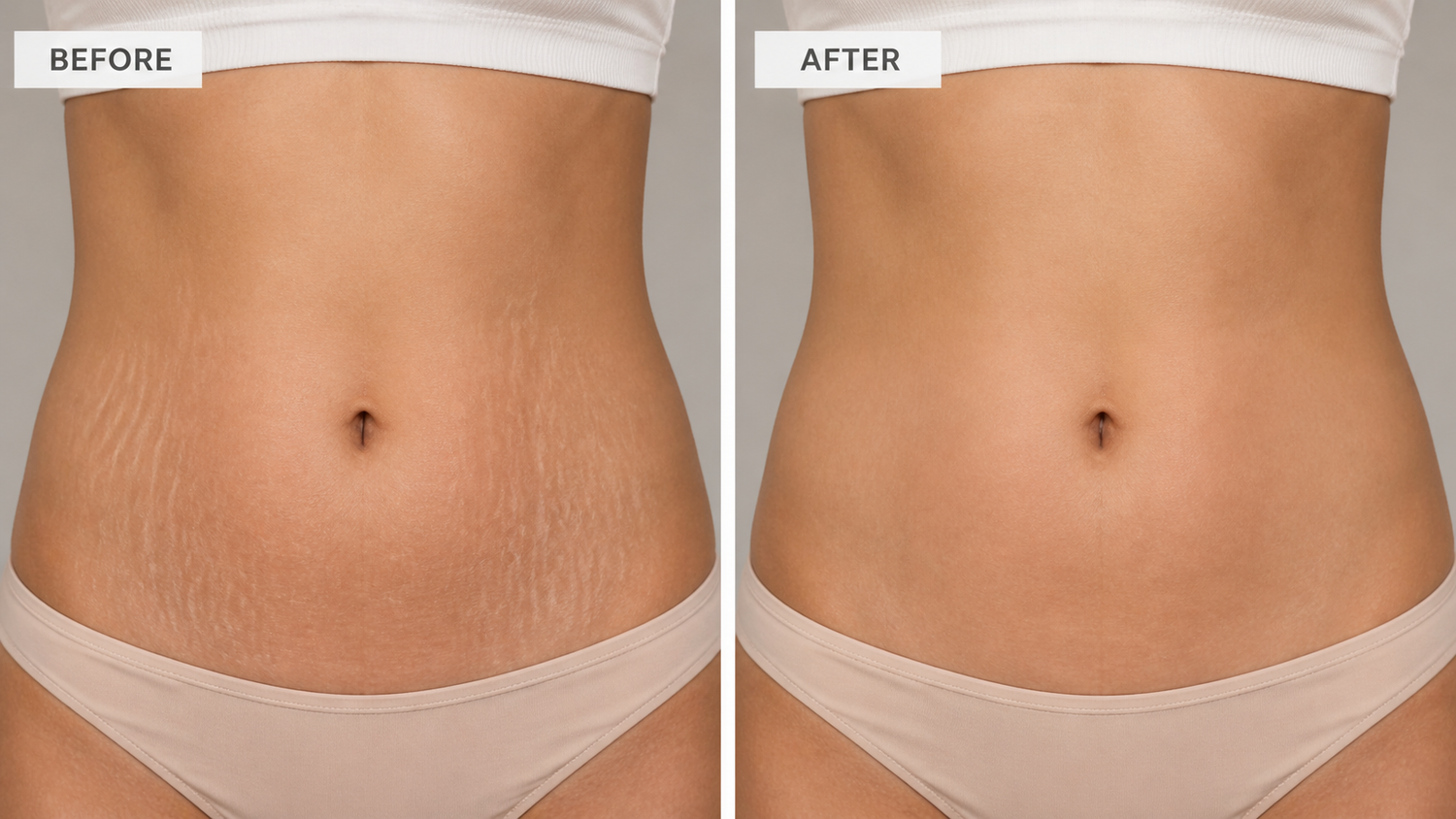
Stretch marks affect up to 90% of women and a significant number of men - yet most treatments either hurt, cost thousands, or barely work. Red light therapy is gaining attention as a painless, non-invasive option that may help fade stretch marks by stimulating your skin's natural repair processes. But does the science actually back it up?
In this guide, we break down the clinical evidence, explain exactly how red light therapy works on stretch marks at the cellular level, and help you decide whether it could work for you.
What Causes Stretch Marks?
Stretch marks (known medically as striae distensae) form when your skin stretches faster than it can adapt. The rapid stretching tears collagen and elastin fibres in the dermis - the middle layer of your skin - leaving visible lines on the surface.
Common causes include:
- Pregnancy - up to 90% of women develop stretch marks during pregnancy, typically in the third trimester
- Rapid weight gain or loss - sudden body composition changes stress the skin
- Growth spurts - teenagers often develop stretch marks on thighs, hips, and back
- Muscle building - bodybuilders frequently see marks on shoulders, chest, and upper arms
- Hormonal changes - cortisol and other hormones can weaken skin elasticity
Stretch marks typically start as red or purple lines (striae rubra) and gradually fade to white or silver (striae alba) over months to years. The earlier you treat them, the better your chances of improvement - but even older marks can respond to the right approach.
How Does Red Light Therapy Work on Stretch Marks?
Red light therapy uses specific wavelengths of light - primarily red (660nm) and near-infrared (850nm) - to penetrate the skin and trigger biological responses at the cellular level.
Here is what happens when red light reaches damaged skin tissue:
Collagen Production
Red light at 660nm is absorbed by mitochondria in your skin cells, boosting ATP (energy) production. This increased cellular energy stimulates fibroblasts - the cells responsible for producing collagen and elastin. Since stretch marks are essentially collagen damage, rebuilding collagen is the most direct path to improvement.
Deep Tissue Repair
Near-infrared light at 850nm penetrates deeper into the dermis where stretch mark damage originates. This wavelength supports tissue remodelling, reduces inflammation, and promotes blood flow to the treatment area - delivering more nutrients and oxygen to support repair.
Dual Wavelength Advantage
Research suggests that combining both wavelengths produces better outcomes than either alone. A clinical study using combined red (660nm) and near-infrared (840nm) therapy twice weekly for 12 weeks found increased collagen density in stretch mark tissue. The dual-wavelength approach treats both the surface appearance and the deeper structural damage simultaneously.
What Does the Research Say?
The evidence for red light therapy and stretch marks is growing, though still in its early stages. Here are the key findings:
Clinical Studies
A study published in the Journal of Cosmetic and Laser Therapy examined broadband infrared light treatment for stretch marks and documented measurable reductions in striae appearance. Participants showed improvement in both the colour and texture of their marks over the treatment period.
Research investigating 675nm laser treatment for striae distensae found significant improvement on the Manchester Scar Scale - a validated clinical measurement tool. Patients reported improved skin texture with good tolerance and minimal side effects.
The combination wavelength study (660nm + 840nm) demonstrated actual collagen remodelling at the cellular level after 12 weeks of consistent treatment - suggesting that the improvements are structural, not just cosmetic.
What Results Can You Realistically Expect?
Based on the current evidence:
- Weeks 4-8: Initial changes in texture and colour may become visible
- Weeks 12-16: Most significant improvements as collagen remodelling takes effect
- 3-6 months: Older white stretch marks may soften and fade with consistent use
- Overall: Studies suggest a 20-30% reduction in width and colour intensity is typical, though individual results vary
It is important to set realistic expectations. Red light therapy can help fade and soften stretch marks, but complete removal of established marks is unlikely with any treatment. The goal is meaningful improvement - not perfection.
Best Treatment Protocol for Stretch Marks
For the best results with at-home red light therapy, consistency matters more than intensity.
Recommended Routine
- Frequency: 3-5 sessions per week
- Session length: 10-20 minutes per treatment area
- Duration: Minimum 12 weeks before evaluating results
- Wavelengths: Dual 660nm (red) + 850nm (near-infrared) for combined surface and deep treatment
Tips for Better Results
- Treat clean, dry skin - remove any lotions or oils before your session, as they can reflect light
- Position the device close - keep it within 6 inches of the skin for optimal light delivery
- Be consistent - sporadic use will not deliver results; schedule your sessions like any other routine
- Hydrate well - well-hydrated skin responds better to treatment
- Combine with moisturiser after - apply a collagen-supporting cream or oil after each session to maximise the repair window
Which Device for Which Area?
Different stretch mark locations call for different treatment approaches:
Abdomen and hips - A targeted wearable device like the Lumovex Red Light Therapy Belt works well here. It wraps around the midsection, delivering consistent coverage to the most common stretch mark area - especially post-pregnancy marks. The hands-free design means you can treat while going about your evening routine.
Thighs, back, and chest - A panel device like the Lumovex Pro Panel 540 offers broader coverage. With 289 LEDs (145 red at 660nm + 144 near-infrared at 850nm), it covers larger treatment areas efficiently. Position it on a desk or stand and treat from a comfortable distance.
Full body or multiple areas - If you have stretch marks across several areas, the Lumovex Total Recovery Mat lets you treat your entire body in a single session. Simply lie on the mat for your treatment window and cover every area at once.
Small or isolated marks - For targeting individual stretch marks or small clusters, the Lumovex Sculpt Wand offers precise spot treatment at the exact wavelengths needed. Its compact size makes it easy to focus on specific problem areas without treating the whole region.
Red Light Therapy vs Other Stretch Mark Treatments
How does red light therapy compare to other common approaches?
| Treatment | Pain Level | Cost | Downtime | Evidence Level |
|---|---|---|---|---|
| Red light therapy | None | Low (at-home device) | None | Moderate - growing |
| Laser resurfacing | Moderate-high | High (per session) | 1-2 weeks | Strong |
| Microneedling | Moderate | Medium (per session) | 2-5 days | Moderate |
| Topical retinoids | Mild irritation | Low | None | Moderate |
| Chemical peels | Mild-moderate | Medium | 3-7 days | Limited |
| Bio-oil/creams | None | Low | None | Weak |
Red light therapy sits in a unique position: it is one of the only treatments with zero pain, zero downtime, and a one-time device cost rather than ongoing clinic fees. While laser resurfacing may deliver stronger results for severe marks, many people prefer to start with a non-invasive approach at home.
Frequently Asked Questions
How long does it take for red light therapy to work on stretch marks?
Most people begin noticing texture and colour changes within 4-8 weeks of consistent use. Significant improvement in collagen density typically takes 12-16 weeks. Older white stretch marks may take 3-6 months of regular sessions.
Can red light therapy remove stretch marks completely?
No treatment can completely remove established stretch marks. Red light therapy may help fade their colour, soften their texture, and reduce their width over time. The goal is meaningful improvement rather than total elimination.
Is red light therapy safe during pregnancy?
While red light therapy is generally considered safe, there is limited research on its use during pregnancy. If you are pregnant or breastfeeding, consult your GP or midwife before starting any new treatment.
Does red light therapy work on old white stretch marks?
Yes, though newer red or purple marks typically respond faster. Older white marks (striae alba) can still show improvement with consistent treatment over 3-6 months, as the light stimulates collagen remodelling in the underlying tissue.
How often should I use red light therapy for stretch marks?
For best results, aim for 3-5 sessions per week, each lasting 10-20 minutes on the treatment area. Consistency is more important than session length - regular shorter sessions outperform occasional long ones.
Can I combine red light therapy with other stretch mark treatments?
Yes. Red light therapy pairs well with topical treatments like retinoids, vitamin C serums, or moisturisers applied after your light session. Some people also combine it with microneedling (on separate days) for enhanced collagen stimulation.


Leave a comment
This site is protected by hCaptcha and the hCaptcha Privacy Policy and Terms of Service apply.