If you've spent years cycling between steroid cream, ketoconazole shampoo, and the occasional flare-up that ruins your week, you're not alone. Seborrhoeic dermatitis affects somewhere between 1 and 3 percent of adults in the general population, and rates are far higher in people with oily skin, certain neurological conditions, or a weakened immune system. It's chronic. It's stubborn. And there's no cure - just management.
So when people ask whether red light therapy can help, we want to be straight with you. Red light therapy is not a cure for seb derm. Anyone selling it as one is misleading you. But there is a growing body of research suggesting it can play a useful role alongside your existing treatment - calming inflammation, supporting skin barrier repair, and reducing the frequency or intensity of flare-ups.
This guide covers what the evidence actually shows, where the limits are, and how red light therapy compares for other inflammatory skin conditions like rosacea, eczema, psoriasis, and acne. No hype. No medical claims we can't back up. Just what we know.
What seborrhoeic dermatitis actually is (and why it's so hard to shift)
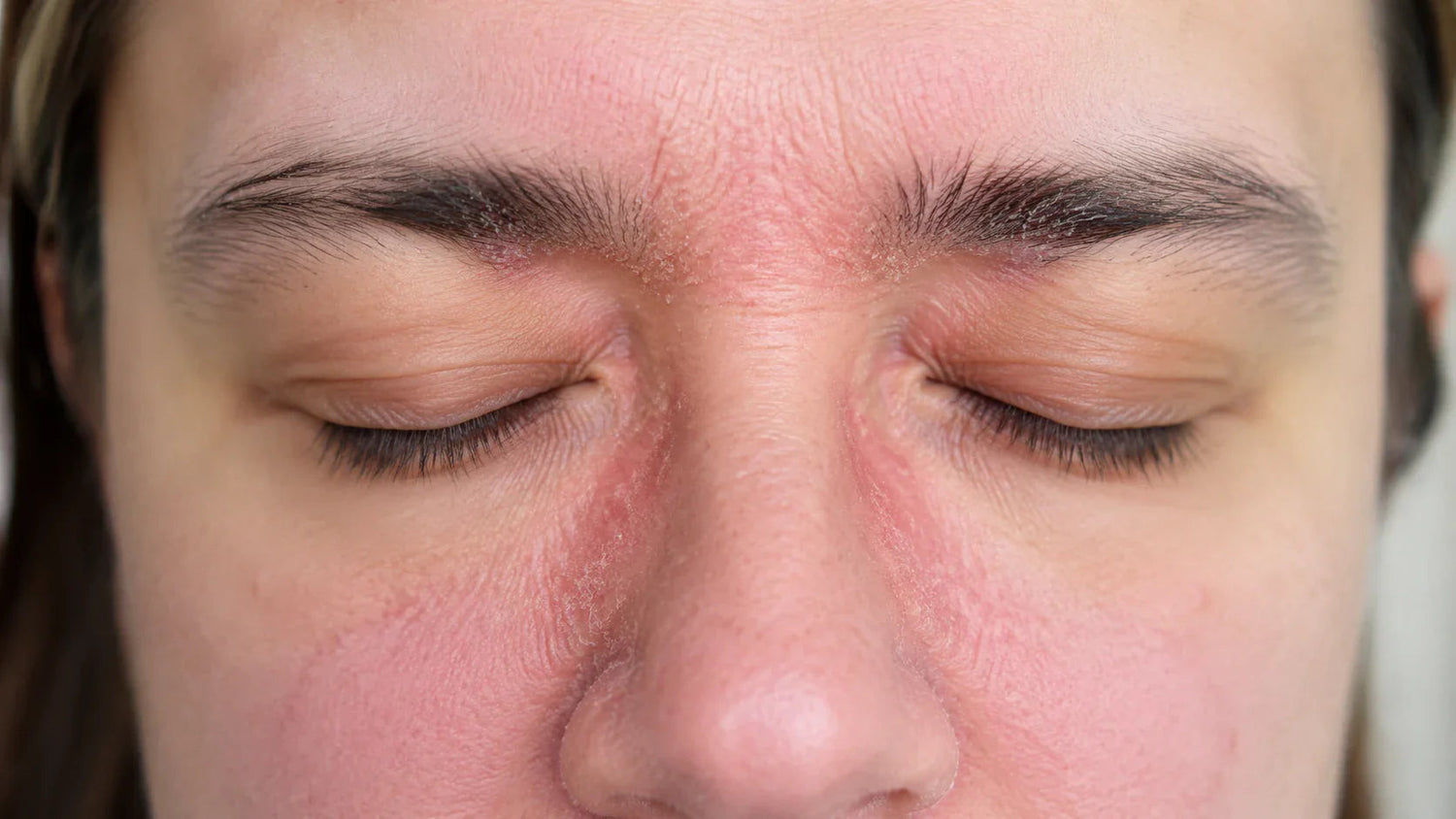
Seborrhoeic dermatitis is a chronic inflammatory skin condition that shows up as red, flaky, sometimes greasy patches in areas with lots of oil glands - the scalp, eyebrows, sides of the nose, ears, chest, and along the hairline. Severe cases can spread to the back, armpits, and groin. The flakes range from fine and white (often dismissed as dandruff) to thick, yellow, and oily.
Three things drive it:
- Malassezia yeast - a fungus that lives naturally on everyone's skin but triggers an immune reaction in people with seb derm. This is why antifungal shampoos like Nizoral (ketoconazole) work.
- Sebum overproduction - the yeast feeds on the oils in sebum, which is why oily skin types are more prone.
- Skin barrier dysfunction - the skin barrier in seb derm sufferers is often compromised, leaking moisture and letting irritants in. This drives chronic low-grade inflammation that keeps the cycle going.
That last point is where things get interesting. Even when you control the yeast with antifungal shampoo and calm the inflammation with steroid cream, the underlying barrier dysfunction often persists. Which is why people get flare-ups every few weeks no matter how disciplined they are with treatment.
Why steroid creams and antifungal shampoos hit a ceiling
Steroid creams like hydrocortisone or betamethasone work by suppressing the inflammatory response. They're effective at calming an active flare-up. The problem is they're not designed for long-term daily use. Prolonged use can thin the skin, cause rebound flares when you stop, and lose effectiveness over time. Most dermatologists will tell you to use them sparingly - hit a flare-up hard for a few days, then back off.
Antifungal shampoos and creams (ketoconazole, ciclopirox, selenium sulphide) attack the Malassezia yeast directly. They work, but they don't address the inflammation or barrier dysfunction. That's why you can be diligent with Nizoral twice a week and still get flare-ups when you're stressed, tired, or the seasons change.
The honest gap in conventional treatment: there isn't a great, sustainable, daily option for the chronic inflammation between flare-ups. That's the gap red light therapy is starting to fill.
How red light therapy works on inflammatory skin conditions
Red light therapy (also called photobiomodulation or low-level light therapy) uses specific wavelengths of light - typically red light at 630 to 660 nanometres and near-infrared at 810 to 850 nanometres - to influence cellular activity in the skin.
The mechanism, as best understood: light at these wavelengths is absorbed by cytochrome c oxidase, an enzyme inside the mitochondria of your cells. This boosts cellular energy production (ATP), reduces oxidative stress, and modulates inflammatory signalling. Researchers Avci and colleagues described the mechanism in detail in a widely cited review published in Seminars in Cutaneous Medicine and Surgery in 2013, and the Hamblin laboratory at Harvard has published extensively on the anti-inflammatory effects of photobiomodulation.
What this translates to clinically:
- Reduced inflammatory cytokines (the chemical signals that drive redness, swelling, and irritation)
- Improved skin barrier function (keeping moisture in, irritants out)
- Increased fibroblast activity (the cells that produce collagen, supporting repair)
- Better local circulation (more nutrients to the tissue, faster waste clearance)
For inflammatory skin conditions, that combination of effects matters. You're not killing the underlying trigger (the yeast, in seb derm's case), but you're calming the inflammatory response and supporting the barrier - which is exactly the gap conventional treatment leaves open.
The Lumovex Spectrum Pro Mask uses 660nm red light
Our Spectrum Pro Mask delivers 660 nanometre red light across the full face including the forehead, sides of the nose, and along the hairline - exactly the areas seb derm tends to flare. The 660nm wavelength is one of the most research-backed for skin applications, with research supporting its role in reducing inflammation, supporting collagen production, and improving overall skin condition.
For seb derm sufferers specifically, the appeal is the daily-use angle: 10 to 15 minutes a session, no medication, no rebound effect, no thinning of the skin. It works alongside your existing treatment rather than replacing it.
The honest limits - what red light therapy will not do
We're going to be straight with you, because we'd rather you make an informed decision than buy something that disappoints you.
Red light therapy will not:
- Kill the Malassezia yeast that drives seb derm. That's what your antifungal shampoo does. Do not stop using it.
- Replace your steroid cream during an active severe flare-up. Use the cream as directed by your GP for the flare itself.
- Work overnight. Most users report noticeable changes after 4 to 8 weeks of consistent use, not days.
- Cure seb derm. Nothing cures seb derm. The goal is fewer flare-ups, milder symptoms, better skin between episodes.
- Treat the scalp through hair. Red light cannot penetrate dense hair effectively. The Spectrum Pro Mask is designed for facial seb derm (eyebrows, hairline, sides of the nose). For scalp seb derm specifically, you'd need a dedicated scalp device, which is a separate category.
Where it can help is in reducing the frequency and intensity of flare-ups, calming the chronic low-grade inflammation between episodes, supporting skin barrier repair, and giving you a daily tool that's safe for long-term use - filling the gap that steroid cream and antifungal shampoo leave open.
Other inflammatory skin conditions that respond to red light therapy
Seb derm rarely shows up on its own. Many people who deal with it also have one or more of the conditions below. Here's what the evidence says about red light therapy for each.
Rosacea
Rosacea is another chronic inflammatory condition with significant overlap in mechanism with seb derm - vascular dysregulation, barrier dysfunction, and chronic inflammation. A 2014 study published in Photomedicine and Laser Surgery by Wunsch and Matuschka found that red light therapy at 611 to 650 nanometres significantly improved skin complexion and reduced visible signs of skin ageing and inflammation. Multiple smaller studies and clinical reports have suggested benefit for the persistent erythema (redness) component of rosacea, though results vary individual to individual.
What to expect: gradual reduction in baseline redness, fewer flushing episodes, smoother skin tone. Not a cure for the underlying condition. The Spectrum Pro Mask covers the cheeks, nose, and forehead - the classic rosacea distribution.
Eczema (atopic dermatitis)
Eczema is driven by a combination of barrier dysfunction, immune dysregulation, and inflammation - again, overlapping mechanisms with seb derm. Several published studies have shown improvement in eczema severity scores with red and near-infrared light therapy, particularly for the chronic itch and barrier component.
For eczema on areas other than the face (arms, hands, back, legs), our Pro Panel 540 is a better fit. It's a 289-LED panel that delivers 660nm red and 850nm near-infrared light over a wider area, designed for body application rather than facial.
Psoriasis
Psoriasis is more complex. It's an autoimmune condition where the skin's cell turnover is dramatically accelerated, leading to thick, scaly plaques. UV light therapy (specifically narrowband UVB) has been the mainstay light-based treatment for decades and is highly effective. Red and near-infrared light therapy is a different mechanism - less aggressive, more focused on inflammation and barrier - and has shown promising results in some studies for mild to moderate plaque psoriasis, particularly when combined with conventional treatment. It is not a substitute for prescription treatment in moderate to severe cases.
For a deeper dive on red light therapy for eczema and psoriasis specifically, including treatment considerations and the latest clinical evidence, see our full guide on red light therapy for eczema and psoriasis.
Acne (including hormonal and inflammatory)
Red and blue light therapy for acne is one of the most clinically established applications. Blue light at 415 nanometres targets the bacteria (Cutibacterium acnes) that drive acne. Red light at 660 nanometres reduces the inflammatory response. Combined red and blue light therapy has been studied extensively, with multiple published trials showing significant reduction in inflammatory acne lesions.
Perioral dermatitis
Perioral dermatitis (small inflamed bumps around the mouth) is often triggered by topical steroids ironically - which makes it a particularly difficult condition to treat, because the obvious go-to (steroid cream) makes it worse long-term. Red light therapy's anti-inflammatory mechanism, without the steroid rebound risk, makes it a logical option for the chronic management phase, though dedicated trials are still limited.
How to use red light therapy alongside your existing treatment
If you're going to try red light therapy for seb derm or another inflammatory skin condition, here's the protocol that makes sense based on the evidence and what most dermatology clinics suggest:
- Keep using your antifungal shampoo. Nizoral or its equivalent is doing the work on the yeast. Do not stop.
- Keep your steroid cream for active flares. Use it as your GP directed - usually a short course to knock back a flare-up.
- Add red light therapy as your daily maintenance layer. 10 to 15 minutes per session, 4 to 5 sessions per week minimum.
- Apply to clean, dry skin. No moisturiser, serum, or steroid cream during the session - just clean skin and the device. You can apply your skincare afterwards.
- Be consistent for at least 8 weeks before judging results. Inflammatory skin conditions are slow to respond. Most users report changes between week 4 and week 8.
- Track your flare-ups. Keep a simple note of when flares happen, how long they last, and how severe they are. Compare the 8 weeks before and the 8 weeks after starting red light therapy.
What to avoid: do not use red light therapy on broken or weeping skin during a severe flare. Wait until the cream has calmed it down, then resume. Do not stop your prescription treatment because you've added red light therapy - they work together, not in competition.
What a realistic timeline looks like
Realistic Timeline: What to Expect
Red light therapy isn't an overnight fix. Here's roughly how progress unfolds for most users with consistent daily use (10 minutes per session, 5-7 sessions per week):
| Timeframe | What Most Users Report |
|---|---|
| Week 1-2 | Skin feels calmer immediately after sessions. No major visible change yet. |
| Week 3-4 | Less reactivity. Flare-ups may still happen but feel less intense. |
| Week 5-8 | Reduced baseline redness. Fewer visible flare days. Skin feels more resilient. |
| Week 8-12 | If it's going to work for you, this is where you'll see clear improvement. Most users report fewer and milder flare-ups, and better skin overall between episodes. |
| Beyond Week 12 | Maintenance phase. Drop to 3-4 sessions per week and observe what works for your skin. |
If you've seen no change at all by week 8 with consistent use, red light likely isn't the right tool for your specific case - and our 30-day guarantee means you're not stuck with it.
Important caveat: not everyone responds. Skin biology is highly individual. Some people see major improvement, some see modest improvement, and a small number see little to no change. This is true for every skin treatment ever invented, including the gold-standard ones. That's why we offer a 30-day money-back guarantee on the Spectrum Pro Mask - if you give it a proper try and it's not working for you, you're not stuck with it.
Frequently asked questions
Can I use red light therapy if I'm currently using a steroid cream?
Yes, but not at the same time. Apply the cream as directed by your GP, and use the red light therapy on a separate skincare-free session - either earlier in the day or on cream-free days during your tapering period. Do not combine the two on the skin simultaneously.
Will red light therapy interact with my prescription medication?
There are no known interactions between red light therapy at 660nm and oral seb derm medications (oral antifungals, antibiotics, isotretinoin). However, isotretinoin can make skin more photosensitive in general, so check with your prescribing doctor before starting any new light-based therapy if you're on it.
Is it safe for sensitive skin?
Red light therapy at 660nm is one of the gentlest interventions in dermatology. There's no UV, no heat damage, no skin thinning. Side effects are rare and mild (occasional dryness or temporary redness during the first week as skin adjusts). It is significantly gentler than topical retinoids, exfoliating acids, or chemical peels.
How does it compare to going to a clinic?
Clinic-grade LED therapy sessions typically run between 60 and 100 pounds per session, with most protocols requiring 8 to 12 sessions for visible results. The Spectrum Pro Mask costs 149.99 pounds - roughly the price of two clinic sessions - and you can use it daily at home for years. The wavelength and dose are comparable to most clinic devices for at-home use.
Can I use it on my scalp?
The Spectrum Pro Mask is designed for the face and works on the hairline edges, but it cannot effectively penetrate dense hair. If your seb derm is primarily scalp-based, a dedicated scalp comb or cap device would be a better fit - that's a separate product category.
How often do I need to use it?
For active inflammatory conditions like seb derm, 4 to 5 sessions per week of 10 to 15 minutes is what most protocols recommend. Once you've stabilised your skin, 3 to 4 sessions per week is enough for maintenance. More than once per day is not better - the skin can only respond to so much stimulation in a 24-hour period.
The bottom line
Red light therapy is not a cure for seborrhoeic dermatitis or any other inflammatory skin condition. It will not replace your antifungal shampoo, your steroid cream during a flare, or your dermatologist. What it does, supported by a solid base of clinical evidence, is calm chronic inflammation, support skin barrier repair, and reduce the frequency and intensity of flare-ups when used consistently alongside your existing treatment.
If you've been managing seb derm or another inflammatory skin condition for years and feel like you've hit the ceiling on what topical medication alone can do, red light therapy is a low-risk, well-tolerated, evidence-based addition worth considering. The Lumovex Spectrum Pro Mask delivers 660nm red light, a wavelength widely used in clinical studies, across the full face, costs 149.99 pounds, and comes with a 30-day money-back guarantee, free UK mainland delivery, and a 2-year warranty. Use it for 30 days. If it's not making a difference for you, send it back.
If you've got questions about your specific skin condition before buying, drop us an email at hello@lumovex.co.uk. We'll give you an honest answer - including telling you if we don't think it's right for you.
This article is for educational purposes only and is not medical advice. Seborrhoeic dermatitis and other inflammatory skin conditions should be diagnosed and managed by a qualified healthcare professional. Always speak to your GP or dermatologist before starting any new treatment, including red light therapy, especially if you are on prescription medication or have a chronic health condition.




Leave a comment
This site is protected by hCaptcha and the hCaptcha Privacy Policy and Terms of Service apply.