

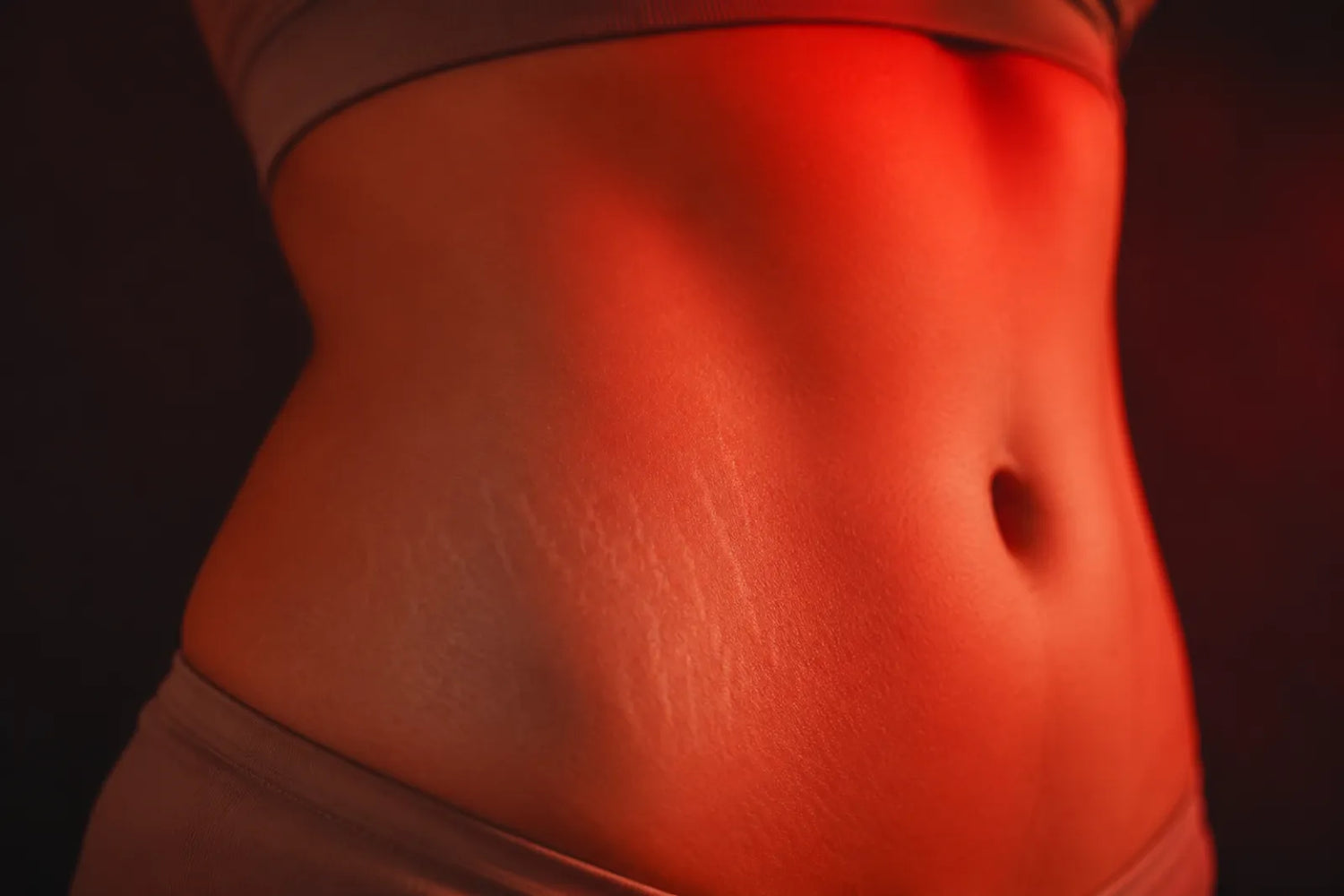
Scars and stretch marks are not just a cosmetic concern - they represent a real, structural change in your skin. Once the tissue is disrupted, the body does its best to patch things up, but the result is rarely a perfect repair. That gap between how skin heals and how it looked before is exactly where red light therapy has been generating serious scientific interest.
Here is what the research actually says, and what you can realistically expect.
What Scars and Stretch Marks Actually Are
At a cellular level, a scar forms when the dermis - the deeper layer of skin - is damaged. The body responds by sending fibroblasts to the site. These specialised cells lay down new collagen to close the wound, but in a rush, they produce disorganised, dense fibres rather than the neatly woven collagen matrix of healthy skin.
Stretch marks (striae) follow the same basic mechanism. They form when the skin is stretched faster than it can adapt - during growth spurts, pregnancy, or rapid weight changes. The dermis tears internally, and the same fibrous, disorganised collagen fills the gap. Stretch marks are, in effect, dermal scars.
Both types of scarring involve collagen that is out of order. The therapeutic target is remodelling that collagen.
How Red Light Therapy Works on Scarred Tissue
Red light therapy - more precisely called photobiomodulation (PBM) - uses specific wavelengths of light to trigger biological responses inside skin cells. It does not heat the tissue or cause damage. Instead, it interacts with photoreceptors in the mitochondria of your cells, particularly a protein called cytochrome c oxidase.
When cells absorb this light, they produce more ATP (cellular energy), increase oxygen consumption, and upregulate the activity of fibroblasts. For scar tissue, this matters enormously: fibroblasts are the same cells responsible for laying down collagen in the first place. When you stimulate them after a scar has formed, they shift into a remodelling mode - breaking down the old, disorganised collagen and replacing it with new, better-aligned fibres.
The two wavelength ranges most studied for this effect are 630–660nm (red light) and 810–850nm (near-infrared). Red light works primarily at the skin's surface and upper dermis. Near-infrared penetrates deeper, reaching the layers where stretch marks and deeper surgical scars reside. The combination of both is why full-spectrum devices tend to produce stronger results.
What the Research Says
The evidence base for photobiomodulation on scar tissue has grown meaningfully over the past decade.
A 2014 study published in Photomedicine and Laser Surgery examined the effect of 660nm red light on wound healing and found a 30–56% acceleration in the early phases of repair, attributed directly to enhanced fibroblast proliferation and collagen synthesis. The mechanism was not cosmetic - it was a measurable shift in tissue biology.
Research published in the Journal of Cosmetic and Laser Therapy investigated near-infrared and red light on hypertrophic scars (raised, thickened scars) and found significant improvements in scar texture, pliability, and colour after a course of consistent treatment. The researchers noted that the remodelling effect is cumulative - it builds with repeated sessions, not a single exposure.
For stretch marks specifically, a clinical trial published in Dermatologic Surgery used combined 585nm and 1,064nm light (both in the photobiomodulation range) on striae and found measurable improvements in elastin and collagen density within the scar tissue after 12 weeks. More recent work has confirmed that 830nm near-infrared in particular supports dermal regeneration at the depth where stretch marks originate.
The consistent thread across this research is collagen remodelling. Red light therapy does not erase scars overnight - it shifts the tissue biology toward repair.
Types of Scars It May Help With
Research suggests red light therapy supports improvement across several scar types:
- Surgical scars - post-operative scars, particularly when treatment begins during the early remodelling phase (4–8 weeks post-surgery), may respond well to consistent photobiomodulation
- Acne scars - both atrophic (depressed) and post-inflammatory hyperpigmentation (the dark marks left after a breakout) show response to red light, with fibroblast stimulation helping to restore volume and melanin regulation supported by anti-inflammatory effects
- Stretch marks - particularly newer (red or purple) striae, which are actively inflamed and more responsive to light therapy; older silver or white marks are more fibrous but still benefit from collagen remodelling over time
- Hypertrophic scars - raised scars from burns or injury may soften with regular use, as the light supports a shift from fibrosis toward more normal collagen architecture
- Keloid scars - the evidence here is thinner, and some practitioners use red light as an adjunct rather than a standalone approach
Flat atrophic acne scars and newer stretch marks tend to see the clearest results. The more recent the scar, generally the more responsive it is.
How to Use Red Light Therapy for Scars
Consistency and correct application matter more than intensity. Here is a practical approach:
Target the right area
For facial scars - acne scarring, post-surgical marks on the face - a full-face LED device like the Lumovex Spectrum Pro Mask treats the entire surface evenly, including areas that are hard to target with a handheld. The mask's solid silicone panel delivers red and near-infrared light across the whole face including the eye area, which is particularly useful for acne scarring around the cheeks and jawline.
For body scars and stretch marks - abdomen, thighs, arms, lower back - a larger panel like the Lumovex Pro Panel 540 gives you the area coverage to treat broad zones effectively. For stretch marks specifically on the abdomen or lower back, a flexible device like the Lumovex Red Light Therapy Belt can be worn directly against the skin, which helps with consistent daily contact.
Session protocol
- Distance: 10–20cm from the skin for panel devices; mask and belt devices are designed for direct contact
- Duration: 10–20 minutes per session
- Frequency: daily or at minimum 4–5 times per week during the active treatment phase
- Skin prep: clean, dry skin with no SPF or heavy occlusive products - anything blocking the skin surface will reduce light transmission
Pair with supportive skincare
Red light therapy works well alongside ingredients that support collagen synthesis. Vitamin C (used in the morning) supports collagen production and reduces post-inflammatory pigmentation. Hyaluronic acid helps with hydration and skin plumpness. Retinoids, used cautiously at night on the same area, also support cell turnover. Avoid applying actives immediately before a red light session - use light on clean skin, then apply skincare afterwards.
What to Expect - A Realistic Timeline
Red light therapy is not a quick fix. It works with your skin's own biology, which operates on a slow schedule.
Weeks 1–4: Little visible change in most people. Cellular changes are happening - fibroblast activity, increased ATP production, early shifts in collagen metabolism - but the surface does not yet reflect them. Some people notice a subtle improvement in overall skin texture or tone.
Weeks 4–8: The first visible improvements typically appear for acne scars and hyperpigmentation. Redness or inflammation in stretch marks may begin to reduce. The remodelling process is underway.
Weeks 8–12: This is where the most meaningful changes tend to become visible. Scar texture improves, pigmentation evens out, and stretch marks may appear less prominent. The skin looks smoother and more uniform.
Beyond 12 weeks: Ongoing use continues to build results. For well-established scars or mature stretch marks, a longer commitment - 6 months or more - reflects the slower biology of fibrous tissue. Many people continue sessions 3–4 times per week as a maintenance protocol.
The most important variable is consistency. A handful of sessions across weeks will not produce meaningful change. Eight to twelve weeks of regular use is the minimum meaningful trial period.
Consistency and correct treatment protocols matter more than the intensity of any single session. Whether you are using a full-face mask for acne scarring or a flexible belt for stretch marks on the abdomen, the underlying principle is the same: regular exposure to the right wavelengths over eight to twelve weeks gives your skin's own biology the signals it needs to remodel and repair.




Leave a comment
This site is protected by hCaptcha and the hCaptcha Privacy Policy and Terms of Service apply.