You bought a red light therapy device. You have been using it for weeks. And nothing seems to be happening. No visible skin improvement, no reduction in soreness, no change at all.
Before you write off the entire technology, consider this: the problem is almost certainly not red light therapy itself. Clinical research consistently shows that photobiomodulation works - when done correctly. The problem is usually the device, the technique, or both.
Here is what might be going wrong and how to fix it.
Your Device Might Not Be Powerful Enough
This is the most common issue, and it is the one manufacturers least want to talk about.
Red light therapy works through a process called photobiomodulation. Specific wavelengths of light are absorbed by photoreceptors in your cells - primarily cytochrome c oxidase, a protein in the mitochondrial electron transport chain. This absorption triggers increased ATP (cellular energy) production, improved oxygen consumption, and enhanced cellular repair processes.
But this only happens when enough light energy actually reaches your cells. The clinical threshold for therapeutic benefit sits between 5 and 50 mW/cm² of power density (irradiance), delivering a total energy dose of 3 to 50 J/cm² per session.
Many budget devices fall well below this range. If a device does not publish its irradiance specifications - or buries them in vague marketing language like "clinical strength" without numbers - that is a red flag.
What to check: Look for the device's stated irradiance in mW/cm² at a specific distance. If it is below 20 mW/cm² at your treatment distance, it may not deliver enough energy to trigger a meaningful cellular response.
You Might Be Using the Wrong Wavelengths
Not all red light is therapeutic. The science is specific about which wavelengths work and why.
Two wavelength ranges have the strongest clinical evidence:
- Red light at 630-660 nm - absorbed in the upper layers of the skin (epidermis and dermis), making it effective for collagen production, skin tone, texture improvement, and surface-level healing. The most-studied wavelength in this range is 660 nm.
- Near-infrared (NIR) at 810-850 nm - penetrates deeper into muscle, connective tissue, and joints. This range drives ATP production in deeper tissues and reduces inflammation. The most-studied wavelength here is 830 nm.
A 2014 controlled trial published in Photomedicine and Laser Surgery found that combining 660 nm and 830 nm wavelengths produced superior results for skin rejuvenation compared to either wavelength alone - including measurable improvements in intradermal collagen density, skin roughness, and fine lines.
Devices that emit light outside these therapeutic windows - or that use broad-spectrum LEDs without precise wavelength targeting - are unlikely to deliver consistent results.
What to check: Confirm your device uses LEDs rated at 660 nm and/or 830-850 nm. Avoid devices that only list "red" or "infrared" without specifying the exact nanometre range.
You Are Probably Too Far Away
Distance is the silent killer of red light therapy effectiveness, and almost nobody talks about it enough.
Light intensity follows the inverse square law: doubling your distance from the device reduces the irradiance by approximately 75%. That is not a small drop. It is the difference between a therapeutic dose and a negligible one.
The recommended treatment distance for most panel and mask devices is 6 to 12 inches (15 to 30 cm):
- At 6 inches: Maximum irradiance. Best for skin treatments, collagen stimulation, and surface-level concerns.
- At 12 inches: Lower but still therapeutic intensity. Suitable for broader coverage and deeper tissue targets like muscle soreness or joint inflammation.
- Beyond 18 inches: Most consumer devices will not deliver a therapeutic dose at this distance.
Interestingly, being too close can also cause problems. At distances under 4 inches, you risk creating hot spots of excessive exposure and preventing proper wavelength mixing across the treatment area.
What to check: Measure your actual treatment distance. If you have been standing across the room or sitting several feet away, you have likely been getting a fraction of the intended dose.
Your Sessions Are Too Short - Or Too Long
Red light therapy follows what researchers call a biphasic dose response. Think of it like exercise: too little produces no adaptation, the right amount produces optimal results, and too much causes diminishing returns or even inhibitory effects.
The research supports these general session guidelines:
- 5 to 20 minutes per treatment area depending on the device's power output
- 3 to 5 sessions per week for most therapeutic goals
- Consistent use over 4 to 12 weeks before expecting visible results
Studies show that total energy doses above 60-80 J/cm² can begin to produce diminishing effects, and doses exceeding 100 J/cm² may actually inhibit the cellular processes you are trying to stimulate.
The World Association of Laser Therapy recommends staying below 100 mW/cm² irradiance and under 10 J/cm² total energy density per treatment area as a general safety guideline.
More is genuinely not better. If you have been doing 45-minute sessions thinking it would speed up your results, you may have been working against yourself.
What to check: Start with 10-minute sessions at 6-12 inches. Track your results over 4 weeks before adjusting. If you have been doing longer sessions, try scaling back to the 10-15 minute range.
You Are Treating Through Barriers
This one sounds obvious, but it catches more people than you might expect.
Red light therapy requires direct contact between the light and bare skin. Clothing, makeup, moisturisers, sunscreen, and serums all absorb, scatter, or reflect the light before it reaches your cells.
Even thin fabric blocks a meaningful percentage of the therapeutic wavelengths. Skincare products with active ingredients like retinol or vitamin C can interfere with light absorption in the upper skin layers.
What to check: Always use your device on clean, bare skin. Remove makeup and skincare products from the treatment area before your session. Apply serums or moisturisers after treatment, not before.
You Are Expecting Overnight Results
Red light therapy is not a quick fix. It is a process of stimulating your body's own repair and regeneration mechanisms - and biology does not work on a two-week timeline.
Here is what the research suggests for realistic timelines:
- Pain and inflammation relief: Some users report improvements within 1-2 weeks of consistent use
- Skin texture and tone: Visible changes typically emerge around 4-8 weeks
- Collagen remodelling and scar improvement: 8-12 weeks minimum, with continued improvements over 6+ months
- Hair growth stimulation: 12-26 weeks of consistent use in clinical studies
If you have been using your device for 10 days and are frustrated by a lack of visible change, you are not giving the biology enough time to work. Cellular regeneration, collagen synthesis, and tissue remodelling are slow, cumulative processes.
What to check: Commit to a minimum 8-week trial with consistent use (3-5 sessions per week) before evaluating your results. Take photos in consistent lighting at the start, at 4 weeks, and at 8 weeks to track changes that might be too gradual to notice day-to-day.
What a Good Setup Actually Looks Like
If you want to give red light therapy a fair trial, here is the baseline:
- A device with verified wavelengths of 660 nm (red) and 830-850 nm (near-infrared), ideally both
- Published irradiance specs showing at least 20-30 mW/cm² at your treatment distance
- Treatment distance of 6-12 inches from the device
- Clean, bare skin in the treatment area
- 10-20 minute sessions, 3-5 times per week
- Minimum 8-week commitment before judging effectiveness
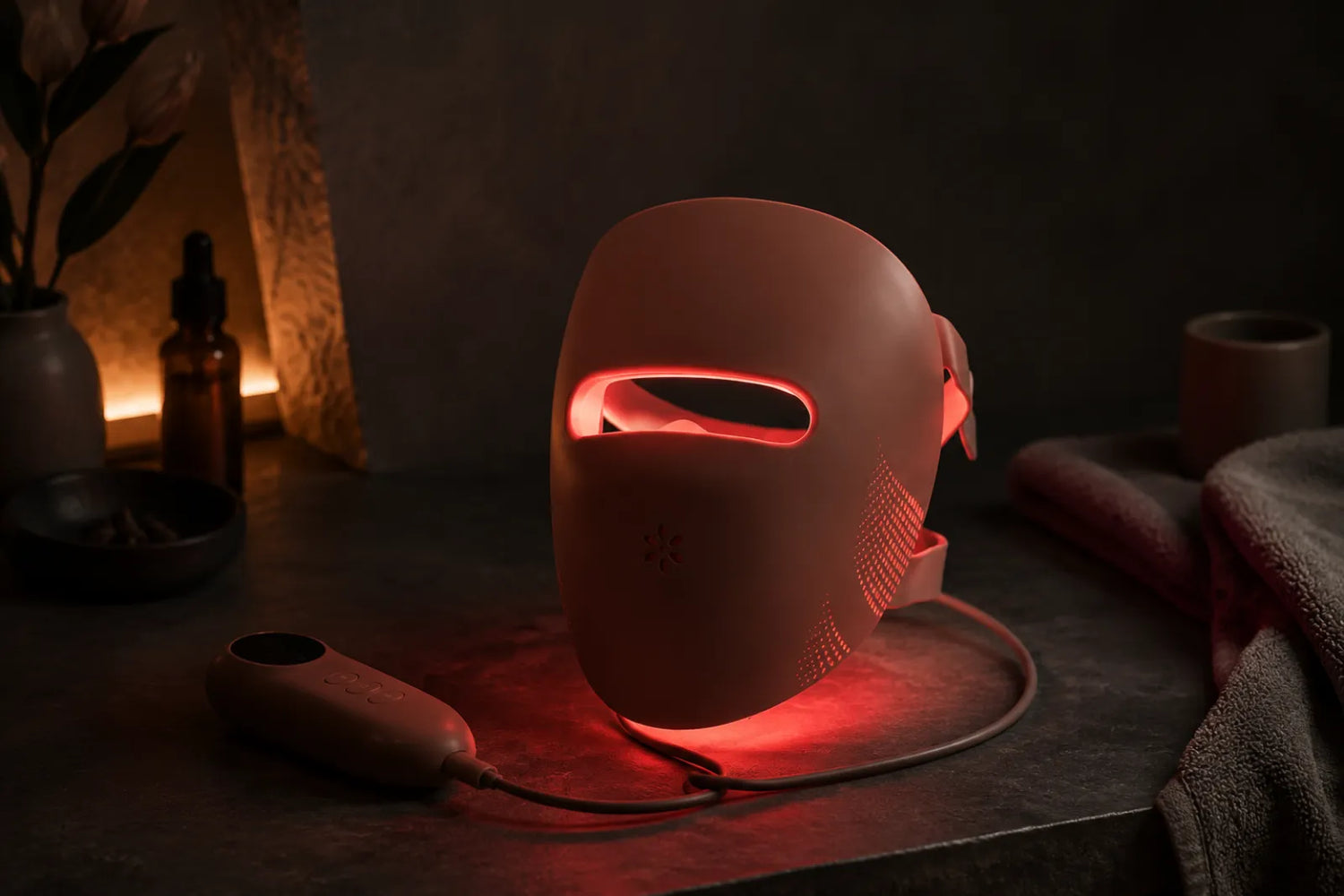
The Lumovex Spectrum Pro LED Face Mask combines both red (660 nm) and near-infrared (850 nm) wavelengths in a single device, worn directly against the skin - which eliminates the distance and positioning variables that trip up so many panel users. The Lumovex Pro Panel 540 delivers 289 dual-wavelength LEDs (145 red at 660 nm, 144 NIR at 850 nm) for larger treatment areas like the back, chest, or legs. If you are still weighing up your options, browse the full range of red light therapy devices and match one to your goal.
The Bottom Line
Red light therapy is one of the most well-researched light-based therapies available for skin health, pain management, and recovery. But like any tool, it only works when used correctly.
If your device is not delivering results, the answer is usually one of five things: insufficient power, wrong wavelengths, too much distance, poor session timing, or unrealistic expectations about the timeline.
Fix the fundamentals, commit to consistency, and give your cells time to respond. The science supports the technology - but only when the technology is used properly.


Leave a comment
This site is protected by hCaptcha and the hCaptcha Privacy Policy and Terms of Service apply.