


If you're dealing with the tingling, numbness or burning of neuropathy, particularly in your feet or hands, you've likely already been told there's no quick fix. That's true. But there's a growing body of clinical research on whether red and near-infrared light - photobiomodulation therapy - can meaningfully support nerve-related discomfort, and it's worth understanding what that research actually says before you spend money on a device.
The short version: several small, peer-reviewed trials have found that photobiomodulation therapy may reduce pain and improve sensory symptoms in peripheral neuropathy, most of the research to date focused on diabetic peripheral neuropathy specifically. It is being studied as a supportive option, not a proven treatment, and it does not reverse nerve damage.
What peripheral neuropathy actually is
Peripheral neuropathy is damage to the nerves outside the brain and spinal cord, most commonly affecting the feet and hands first. Diabetes is the leading cause in the UK, but neuropathy can also follow chemotherapy, certain infections, vitamin deficiencies, or occur with no identifiable cause at all. Symptoms range from tingling and pins-and-needles to numbness, burning pain, or heightened sensitivity to touch.
It's a genuinely difficult condition to manage because the underlying nerve damage often can't be reversed - treatment mostly focuses on managing the cause (like blood sugar control in diabetes) and reducing symptoms. That's exactly the gap photobiomodulation research has been exploring: not a cure for nerve damage, but a non-drug option for symptom relief.
What the research says
Diabetic peripheral neuropathy has the most research behind it. A 2026 randomised pilot trial published in Lasers in Medical Science tested photobiomodulation therapy, with and without an additional intravascular light technique, specifically in people with diabetic peripheral neuropathy, and found the approach feasible with promising early signals for feasibility and tolerability.
A separate randomised, placebo-controlled trial published in the Journal of IMAB tested photobiomodulation as a non-pharmacological complement to standard diabetic neuropathy treatment, again with encouraging results for symptom improvement when added to usual care - not instead of it.
Stepping back further, a systematic review and meta-analysis pooled the evidence on low-level light therapy for diabetic peripheral neuropathy specifically, to determine whether the effect holds up across multiple studies rather than one small trial. The honest conclusion of pooled analyses like this is typically that the direction of effect looks favourable, but study quality and dosing protocols vary enough that firm conclusions are still limited.
Beyond diabetes, researchers at MD Anderson Cancer Center have been studying red light therapy for peripheral neuropathy in cancer patients (a common and difficult side effect of some chemotherapy drugs). Their reporting on the early research is a useful, level-headed summary: light therapy may help reduce inflammation associated with peripheral neuropathy and support circulation, it's considered low risk and non-invasive, and it's being studied as an option to try before more invasive interventions - not a guaranteed fix.
How photobiomodulation may support nerve-related discomfort (the proposed mechanism)
The leading theory is similar to red light therapy's other proposed mechanisms: red and near-infrared wavelengths are absorbed by mitochondria in cells near the skin's surface, which may support local circulation and reduce inflammatory signalling around damaged nerve tissue. Improved local blood flow is one plausible reason symptoms like tingling and discomfort might ease with consistent use, though the exact pathway in nerve tissue specifically is still an active area of research rather than settled science.
What it won't do
This needs to be said plainly: red light therapy does not repair or regenerate damaged nerves, and it is not a substitute for managing the underlying cause of neuropathy, whether that's blood sugar control, stopping a causative medication, or treating a vitamin deficiency. The research so far points to symptom support, not disease reversal. If your neuropathy is new, worsening, or undiagnosed, see your GP before trying any at-home approach - it needs a proper diagnosis first.
Targeting hands and feet at home
Neuropathy typically affects the extremities first, so the practical approach is different from, say, a full-body recovery routine. Two devices suit this better than a large-area recovery mat, which is designed for lying on and covers a broad stretch of the body rather than reaching the hands and feet directly:
- For feet: a handheld device like the Portable Panel can be held or propped at a comfortable distance from each foot, giving direct, targeted light exposure to the area that needs it.
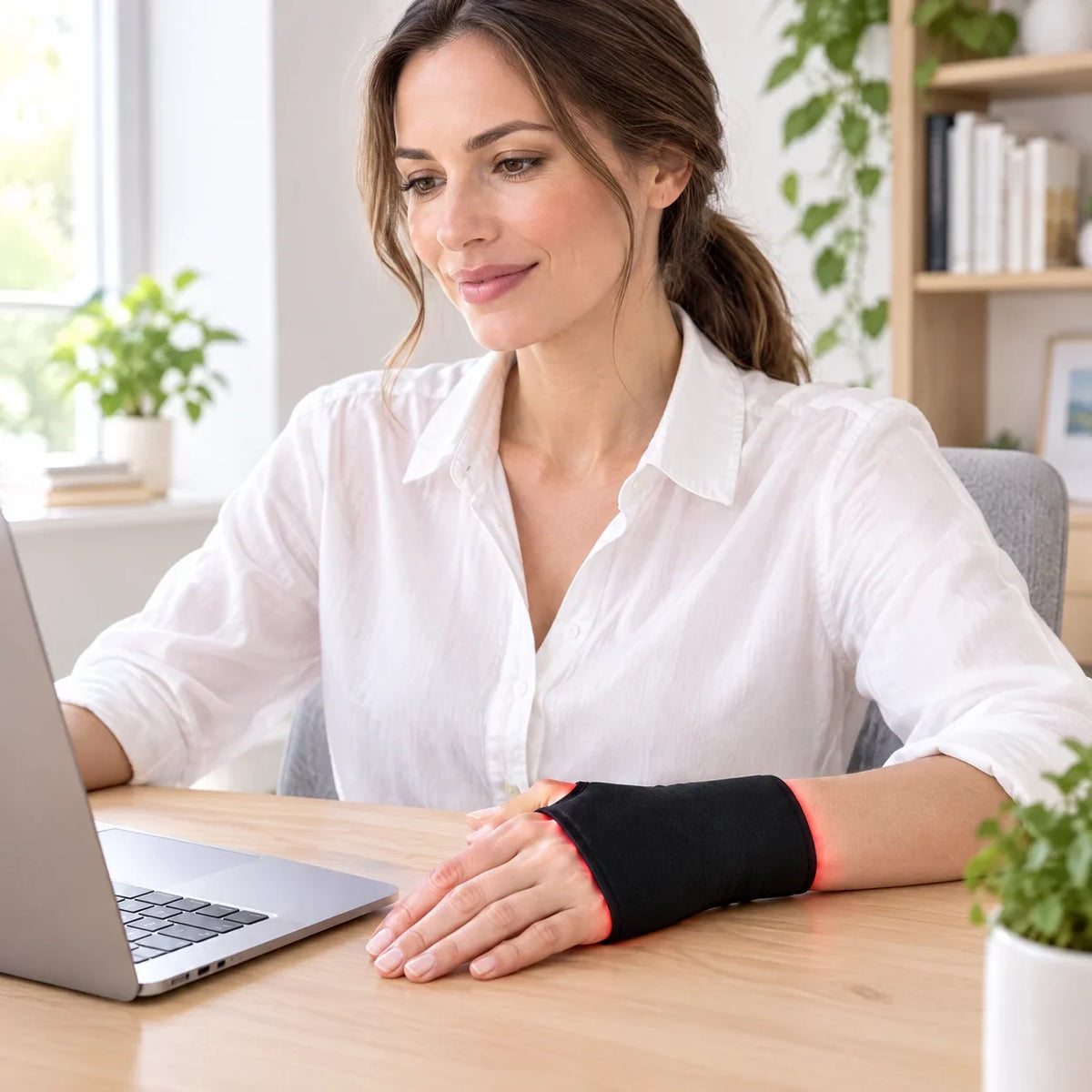
- For hands and wrists: the Red Light Therapy Wrist Strap wraps around the hand and wrist and can be worn hands-free while you sit and rest, which suits a condition that often needs regular, repeatable sessions rather than one-off treatments. If your nerve symptoms are specifically wrist-related (like carpal tunnel), our dedicated guide on red light therapy for carpal tunnel syndrome covers that overlapping territory in more depth.
A sensible starting routine, based on session lengths used in the research and general at-home guidance:
- 10-15 minutes per area, most days of the week
- Consistency over several weeks before judging results - none of the trials above showed change after a single session
- Track your symptoms (a simple 1-10 tingling or pain scale) so you can honestly assess whether it's helping, rather than relying on memory
Safety notes that matter more here than for most conditions
Neuropathy comes with one safety consideration that's genuinely important: reduced sensation. If you have significant numbness in the area you're treating, you may not feel excessive heat building up the way someone with normal sensation would, which raises the risk of skin irritation or burns from a device held too close for too long. Follow the manufacturer's recommended distance and session time exactly, and don't assume that "more" or "closer" is better.
If you have diabetes, check with your GP or podiatrist before starting anything new for foot symptoms, particularly if you have any skin breaks, ulcers, or circulation issues in the area - these need medical assessment, not a light therapy device. Our general safety and contraindications guide covers who should take extra care with red light therapy more broadly.
The bottom line
Red light therapy is not a treatment for nerve damage and won't reverse neuropathy. What a growing set of small clinical trials, mostly in diabetic peripheral neuropathy, suggests is that it may help ease some of the day-to-day symptoms - tingling, discomfort, reduced sensation - when used consistently as an addition to proper medical management, not instead of it. If you have diagnosed neuropathy and your GP is comfortable with you trying it, targeted, consistent sessions on the hands or feet are how the research suggests it's best used.
FAQ
Can red light therapy help with neuropathy?
Several small, peer-reviewed trials, mostly in diabetic peripheral neuropathy, have found that photobiomodulation therapy may help reduce symptoms like pain and tingling when used consistently. It is being studied as a supportive option, not a proven cure, and does not repair nerve damage.
Does red light therapy repair damaged nerves?
No. Current research suggests it may support local circulation and reduce inflammation around affected nerves, which may ease symptoms, but it does not regenerate or repair nerve tissue itself.
What's the best device for neuropathy in the feet?
A handheld, targeted device such as a portable LED panel is better suited to foot neuropathy than a large-area mat, since it lets you hold light close to each foot individually rather than relying on general coverage.
Is red light therapy safe if I have diabetic neuropathy?
It's generally considered low risk, but reduced sensation in affected areas means you may not notice if a device is too close or a session runs too long, raising burn risk. Check with your GP or podiatrist first, especially if you have any skin breaks or circulation issues.
How long before I'd notice a difference?
The clinical trials that reported benefit involved multiple sessions per week over several weeks, not a single use. Track your symptoms with a simple pain or tingling scale so you can judge fairly over time.
Can I use red light therapy instead of my current neuropathy treatment?
No. The research studied photobiomodulation as an addition to standard care (like blood sugar management for diabetic neuropathy), not a replacement. Speak to your GP before changing anything about your existing treatment.



Leave a comment
This site is protected by hCaptcha and the hCaptcha Privacy Policy and Terms of Service apply.