

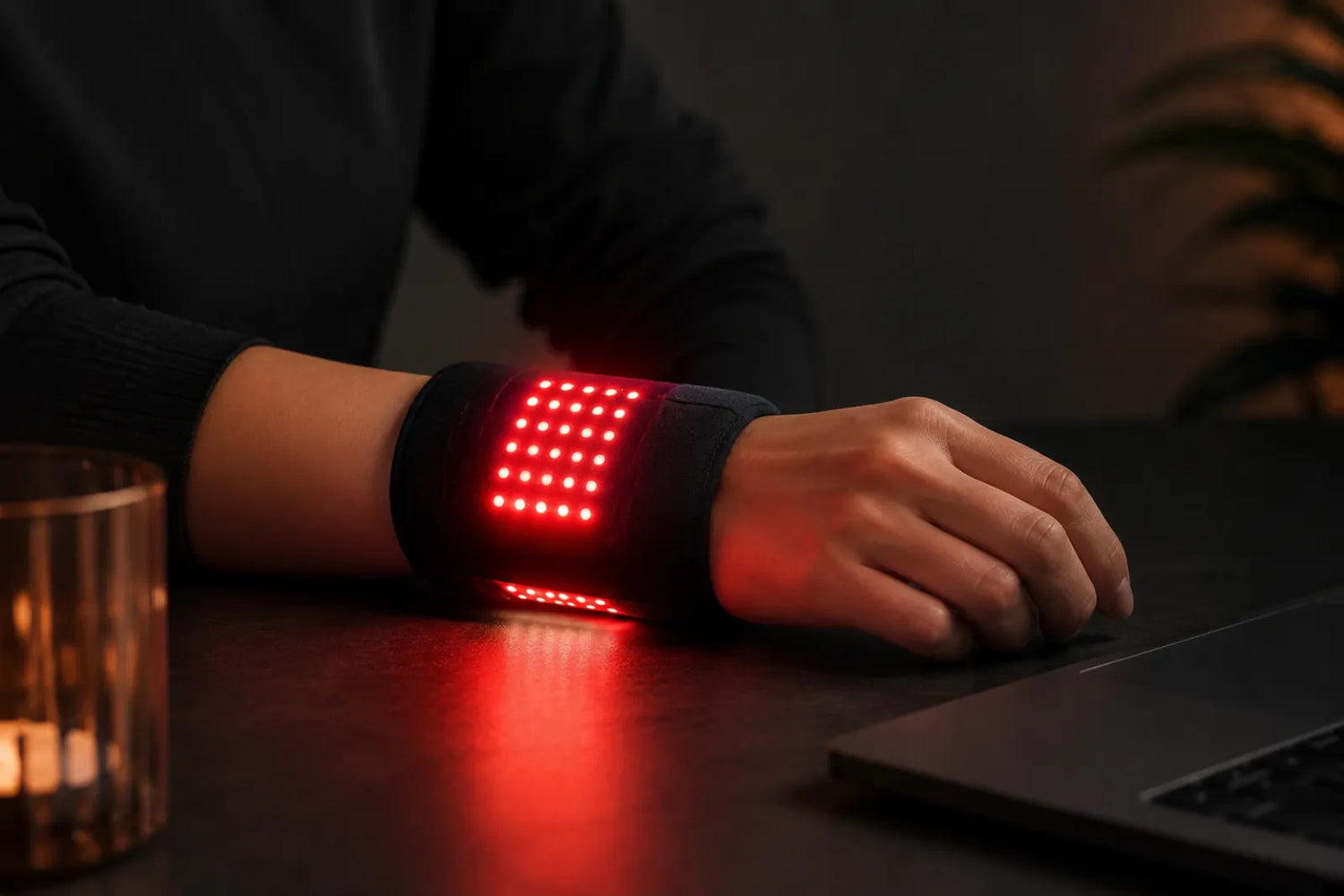
Red light therapy is gaining attention as a non-invasive option for people dealing with carpal tunnel syndrome. But does the science back it up? Here is what the research actually says about using red and near-infrared light for wrist pain, numbness, and nerve function.
What Is Carpal Tunnel Syndrome?
Carpal tunnel syndrome (CTS) happens when the median nerve - which runs from your forearm through a narrow passageway in your wrist called the carpal tunnel - becomes compressed or irritated. This compression leads to pain, numbness, tingling, and weakness in the hand and fingers.
It is one of the most common nerve conditions in the UK, affecting around 3-6% of the adult population. Repetitive hand movements, prolonged keyboard use, and certain health conditions can all increase the risk.
Common treatments include wrist splints, steroid injections, physiotherapy, and in severe cases, surgery. But a growing body of clinical research suggests red light therapy may offer another option worth considering.
How Red Light Therapy May Help Carpal Tunnel
Red light therapy (also called photobiomodulation or low-level laser therapy) uses specific wavelengths of light - typically 660nm (red) and 850nm (near-infrared) - to penetrate tissue and stimulate cellular activity.
For carpal tunnel specifically, the research points to several potential mechanisms:
Reducing Inflammation
Inflammation around the median nerve is a key driver of carpal tunnel symptoms. Red light at 660nm has been shown to support the body's natural anti-inflammatory processes by reducing pro-inflammatory cytokines and promoting cellular repair. Less inflammation around the carpal tunnel may mean less pressure on the nerve.
Supporting Nerve Function
Near-infrared light at 850nm penetrates deeper into tissue, reaching the median nerve itself. Studies suggest this wavelength may support nerve regeneration and improve nerve conduction velocity - essentially helping the nerve transmit signals more efficiently.
Pain Management
Multiple clinical trials have found that photobiomodulation may help reduce pain scores in carpal tunnel patients. A 2016 meta-analysis published in Medicine pooled data from 7 randomised controlled trials (270 treated wrists, 261 controls) and found significant pain improvements on the Visual Analogue Scale (P < 0.01) in the treatment group.
Improving Grip Strength
Carpal tunnel often weakens grip strength as the nerve compression affects muscle function. The same 2016 meta-analysis found that patients receiving low-level laser therapy showed stronger hand grip compared to controls at 12 weeks (P = 0.04), alongside improved sensory nerve action potential measurements.
What Does the Research Say?
Several clinical studies and systematic reviews have examined red light therapy for carpal tunnel:
- Naeser et al. (2002) - A landmark randomised, double-blind, placebo-controlled trial at Boston University School of Medicine studied patients with mild-to-moderate CTS who had failed standard treatments for 3-30 months. Real laser treatment produced significant decreases in pain scores, improved median nerve sensory latency, and improved clinical signs versus sham. Published in Archives of Physical Medicine and Rehabilitation.
- Li et al. (2016) meta-analysis - Pooled 7 randomised controlled trials and found the treatment group showed stronger hand grip, better pain scores, and improved sensory nerve measurements at 12 weeks. Published in Medicine.
- Cochrane Review (2017) - Reviewed 22 trials and found short-term pain reduction of approximately 1.5 points on a 0-10 pain scale versus placebo, with modest grip strength improvements. The reviewers noted that positive effects were strongest in the first 5 weeks.
- Laser vs. Ultrasound meta-analysis (2020) - Compared low-level laser therapy with therapeutic ultrasound across 6 trials and 403 patients. Found comparable effectiveness between the two established modalities across pain, symptom severity, grip strength, and nerve conduction measures.
The evidence is encouraging. Researchers note that while more large-scale studies would help standardise treatment protocols, the current body of evidence supports photobiomodulation as a promising complementary approach for CTS.
How to Use Red Light Therapy for Carpal Tunnel
Based on the available research, here is a practical guide:
Wavelengths
Most clinical trials used wavelengths in the 830-904nm near-infrared range. Consumer devices typically offer 850nm, which falls within the same therapeutic window and penetrates to comparable depths (30-50mm - deep enough to reach the median nerve). Combined with 660nm red light for surface inflammation, this dual wavelength approach provides broad coverage.
Treatment Area
Apply the light directly to the inner wrist where the carpal tunnel is located. You can also treat the forearm along the path of the median nerve for more comprehensive coverage.
Duration and Frequency
Most studies used sessions of 5-15 minutes per treatment area, 3-5 times per week, over 4-12 weeks. Consistency matters more than session length - regular use over several weeks tends to produce better outcomes than occasional longer sessions.
What to Expect
Based on clinical studies, most people report initial improvements in pain and tingling within 2-4 weeks of consistent use. Grip strength improvements may take longer, typically 4-8 weeks. Results vary depending on the severity of the condition.
Red Light Therapy vs Other Carpal Tunnel Treatments
Red light therapy is not a replacement for medical advice or treatment. But it has some practical advantages as a complementary approach:
- Non-invasive - no needles, no surgery, no downtime
- No known side effects at recommended wavelengths and durations
- Can be used at home - no clinic appointments needed
- Works alongside other treatments - studies found laser therapy combined with splinting outperformed splinting alone for symptom severity and patient satisfaction
- Comparable to established therapies - research shows similar effectiveness to therapeutic ultrasound, a standard physiotherapy treatment
For mild to moderate carpal tunnel, red light therapy may be worth trying alongside conventional approaches. For severe cases, always consult a healthcare professional.
Which Lumovex Device Works Best for Carpal Tunnel?
For targeting the wrist and carpal tunnel area directly, the Lumovex Red Light Therapy Wrist Strap is the ideal choice. It wraps around your wrist and delivers both 660nm red and 850nm near-infrared wavelengths directly to the carpal tunnel - hands-free, so you can use it while working, reading, or relaxing.
For broader coverage of the wrist, forearm, and hand, the Lumovex Portable Red Light Therapy Panel lets you treat a wider area in one session. Its compact size makes it easy to position over the inner wrist and forearm for targeted relief.
Both devices are CE certified, with free UK mainland delivery over £50, 30-day returns and a 2-year warranty. Not sure which suits you? Our guide to red light therapy for wrists and hands compares the Wrist Strap, Portable Panel and Pro Panel 540 side by side.
The Bottom Line
The research on red light therapy for carpal tunnel syndrome is promising. Multiple clinical trials and systematic reviews suggest it may help reduce pain, support nerve function, decrease inflammation, and improve grip strength - particularly for mild to moderate cases.
It is not a magic fix, and severe carpal tunnel should always be assessed by a doctor. But as a non-invasive, side-effect-free tool to add to your recovery routine, the evidence suggests it is well worth considering.
Consistency is key. Start with 5-10 minute sessions on the inner wrist, 3-5 times per week, and give it at least 3-4 weeks before assessing results.




Leave a comment
This site is protected by hCaptcha and the hCaptcha Privacy Policy and Terms of Service apply.