

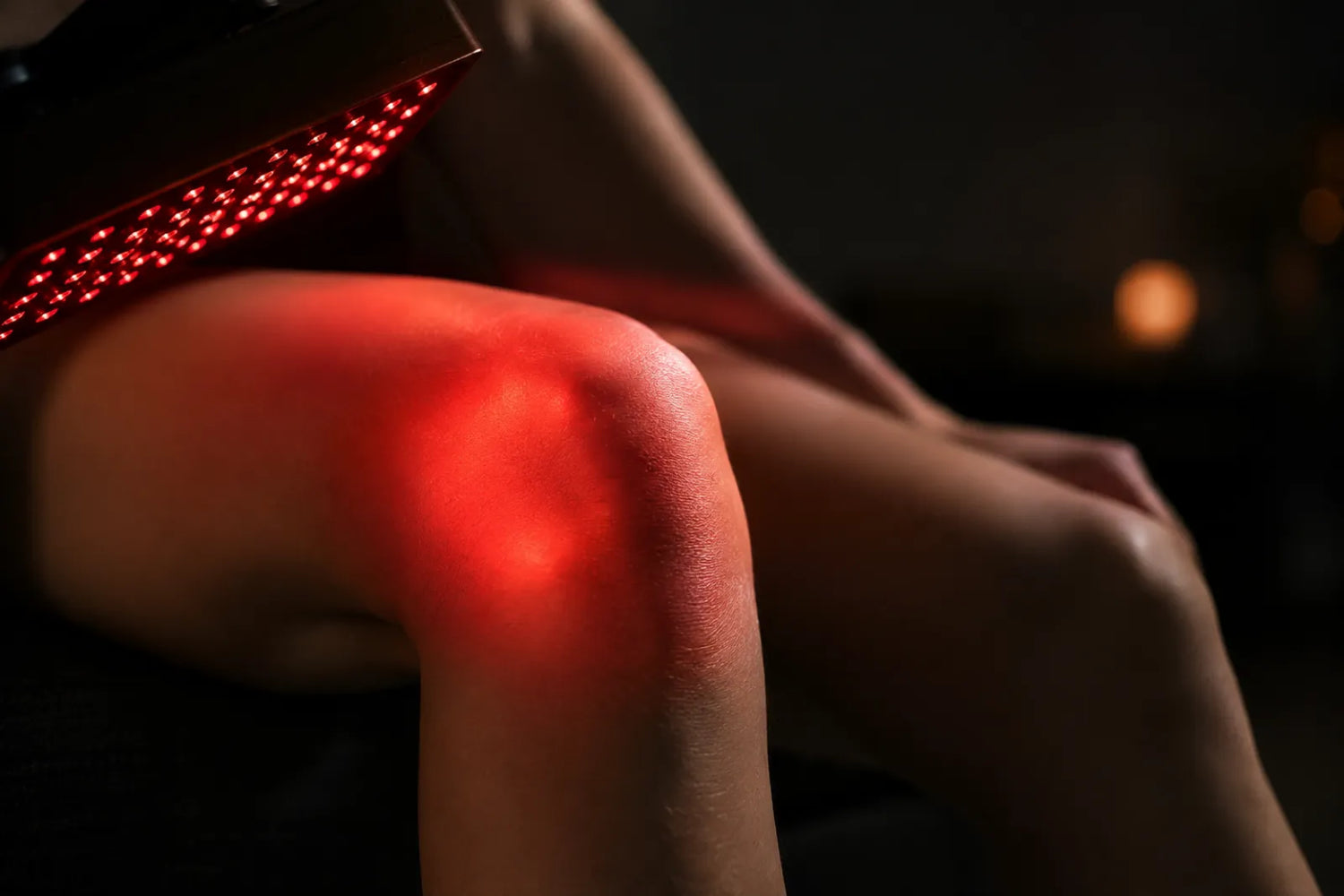
Joint pain and stiffness affect millions of people in the UK, from athletes to office workers to older adults. If you've been researching red light therapy for joint pain, this guide walks through how it works, what the research suggests, which joints respond well, and how to build a routine that actually fits your day.
Why People Are Turning to Red Light Therapy
Red light therapy offers a drug-free, non-invasive approach to supporting joint comfort. Unlike oral supplements or topical creams that work from the outside in or the inside out, red light therapy (RLT) delivers specific wavelengths of light directly to the affected area, where they interact with your cells. There is nothing to swallow, nothing to rub in, and no downtime afterwards. For people who want to support their joints without adding another tablet to the daily pile, that is a big part of the appeal.
What Causes Joint Stiffness in the First Place?
Joint discomfort usually comes down to some combination of inflammation, reduced circulation, and the natural wear that tissues take on over time. When a joint is irritated, the surrounding tissue can become inflamed, blood flow to the area changes, and the whole region can feel tight, achy, and slow to loosen up. Morning stiffness, post-exercise soreness, and that "rusty hinge" feeling after sitting still are all common ways this shows up. Red light therapy is of interest because it targets two of those drivers at once: the inflammatory response and local circulation.
The Science Behind It
Red and near-infrared light (typically 660nm and 850nm) can penetrate several millimetres into tissue. Once it reaches your cells, here is what researchers describe happening:
It supports cellular energy production. The light is absorbed by an enzyme in your mitochondria called cytochrome c oxidase. This helps the cell produce more ATP, the energy currency it needs to repair and maintain tissue.
It encourages local circulation. Part of that process involves the release of nitric oxide, which helps widen nearby blood vessels. More blood flow means more oxygen and nutrients reaching the joint, and more efficient clearing of waste products.
It may help modulate inflammation. Research suggests photobiomodulation can influence the signalling molecules that drive a chronic inflammatory state, helping the body shift from irritation towards repair.
It supports comfort and flexibility with regular use. Because the effect is cumulative, consistency tends to matter more than any single session.
What the Research Says
Photobiomodulation has been studied across a range of musculoskeletal applications, including joints and soft tissue. The broad picture from this body of research is that red and near-infrared light is associated with reduced markers of inflammation, improved tissue repair, and better reported comfort, particularly for exercise-related soreness and everyday joint stiffness. The evidence is promising but mixed, and most trials used clinic devices rather than home LED devices, so larger, longer trials are still needed.
What Conditions Might Benefit?
People use red light therapy for various joint-related concerns:
- Knee discomfort from exercise or daily wear (our knee device guide compares the options)
- Hip and lower back stiffness
- Shoulder tension
- Wrist and hand discomfort, common in office workers and desk-based professionals; the Lumovex Wrist Strap is designed specifically for hands-free wrist and forearm treatment at both 660nm and 850nm
- General age-related joint stiffness
How to Use Red Light Therapy for Joints
For the best results:
- Target the specific joint - position the device directly over the affected area
- Use consistently - 10 to 20 minutes per session, 3 to 5 times per week
- Keep it close - belts, straps, and masks are designed for direct contact; for panels, sit roughly 15 to 30cm away
- Be patient - many people give it 4 to 6 weeks of consistent use before judging it
- Combine with movement - gentle stretching and mobility work alongside RLT often yields better results than light alone
Choosing the Right Device
Different devices suit different joints:
- For small, targeted joints (wrists, elbows, hands) - the Wrist Strap offers hands-free treatment at both 660nm and 850nm wavelengths
- For the lower back, hips, and core - the Red Light Therapy Belt wraps directly around the area for hands-free sessions
- For larger joints and multiple areas - the Pro Panel 540 delivers 289 LEDs across both wavelengths, while the more compact Portable Panel is easy to aim at a single joint on the go
- For the back, hips and legs - the Total Recovery Mat covers you from neck to ankles while you lie on it
If you are treating more than one area, the Lumovex bundles and kits pair complementary devices so you can cover targeted and larger areas together.
Frequently Asked Questions
How long before red light therapy helps with joint stiffness?
Some people say they feel a little looser within the first week or two, but any more meaningful changes tend to build over several weeks of consistent use. It rewards routine rather than the occasional session.
Can I use red light therapy on more than one joint a day?
Yes. You can treat several areas in a day, just keep each one to a sensible 10 to 20 minute session. Because the effect follows a biphasic dose response, longer is not better.
Is it safe to use on joints every day?
For most people daily use is considered safe and is often recommended. It does not use UV light, so it will not burn the skin. If you have a specific joint condition or are under medical care, check with your healthcare professional first.
Should I use it before or after exercise?
Both can work. Some people use it beforehand to warm up an area, others afterwards to support recovery. Pairing it with gentle movement usually gives the best results.
The Verdict
While red light therapy isn't a cure for joint conditions, many users find it a valuable tool for maintaining comfort, supporting circulation, and helping their body's natural recovery processes, especially when paired with sensible movement and consistency.
Disclaimer: Red light therapy is a wellness tool, not a medical treatment. It is not intended to diagnose, treat, cure, or prevent any disease including arthritis. Always consult a healthcare professional for persistent joint pain.




Leave a comment
This site is protected by hCaptcha and the hCaptcha Privacy Policy and Terms of Service apply.