

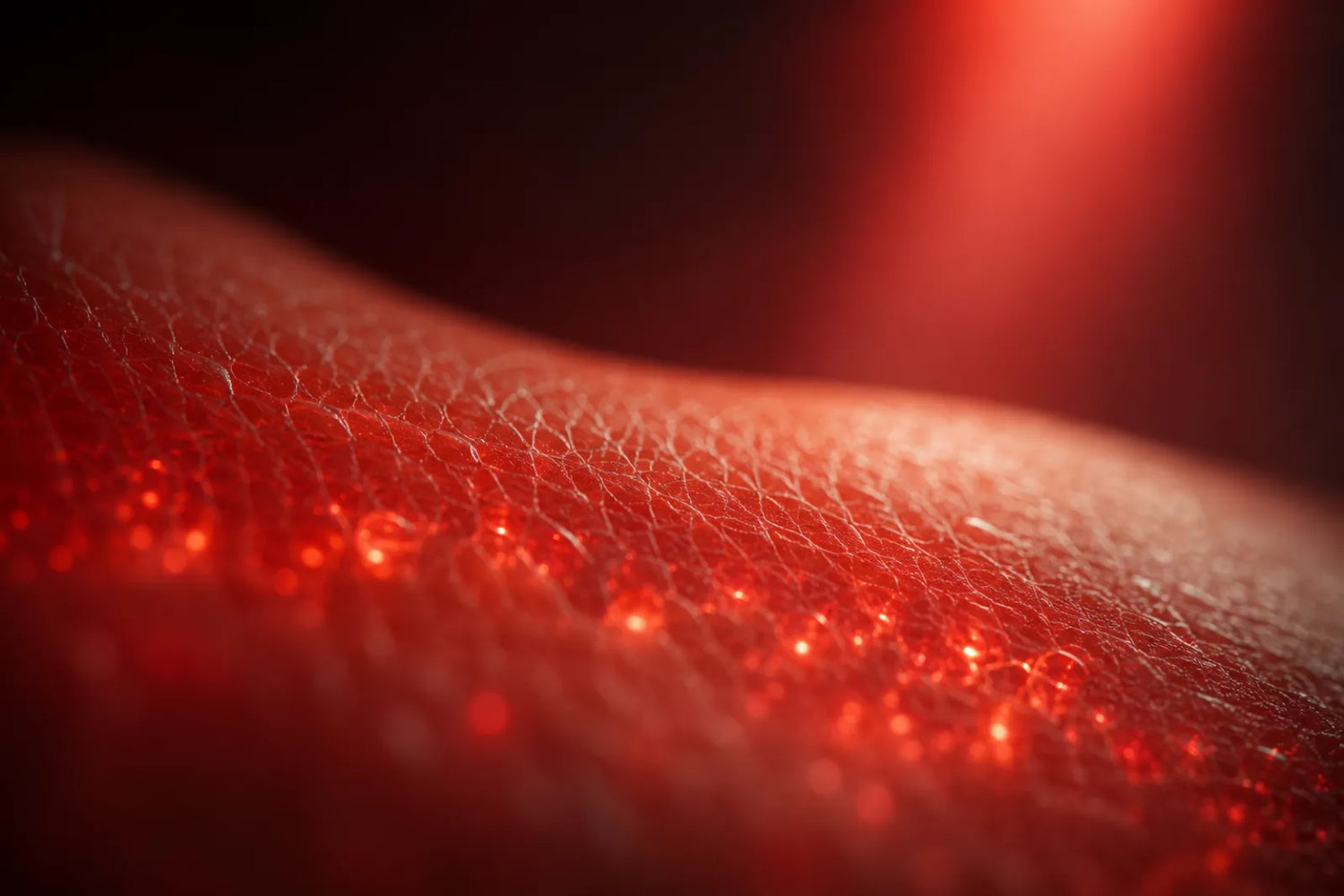
Can Light Really Boost Collagen Production?
If you've heard that red light therapy can help your skin produce more collagen, you might be sceptical. After all, the idea that shining a light on your face could have any real effect sounds almost too simple to be true.
But the science behind photobiomodulation (the technical term for red light therapy) is surprisingly robust. Multiple peer-reviewed studies have demonstrated measurable increases in collagen production following red light treatment-and the mechanism is well understood.
Let's look at how it actually works, what the research says, and how to get the best results.
The Science: How Red Light Affects Your Cells
Your cells contain tiny power plants called mitochondria. These organelles produce adenosine triphosphate (ATP)-the energy currency your cells need to function, repair, and regenerate.
When red and near-infrared light (typically 630-850nm wavelengths) penetrate your skin, they're absorbed by an enzyme in your mitochondria called cytochrome c oxidase. This absorption triggers a cascade of effects:
- Increased ATP production - More cellular energy means cells can work more efficiently
- Reduced oxidative stress - Light therapy helps neutralise harmful free radicals
- Enhanced blood flow - Improved microcirculation delivers more nutrients to skin cells
- Fibroblast stimulation - The cells responsible for collagen production become more active
It's this last point-fibroblast stimulation-that's most relevant for collagen.
What the Research Shows
A 2014 study published in Photomedicine and Laser Surgery followed 136 participants who received red light treatments twice weekly for 30 sessions. The results were significant:
- Participants showed measurable increases in collagen density
- Skin roughness decreased
- Wrinkle appearance reduced
Another study in the Journal of Cosmetic and Laser Therapy found that LED red light therapy increased intradermal collagen density and reduced wrinkles, with participants reporting smoother, firmer-feeling skin.
The evidence consistently points to real, measurable changes-not just subjective improvements.
What Wavelengths Work Best for Collagen?
Not all red light is created equal. Research suggests specific wavelengths are optimal for collagen stimulation:
660nm (visible red):
- Penetrates 2-3mm into the skin
- Targets the epidermis and upper dermis
- Stimulates surface-level fibroblasts
- Best for fine lines and skin texture
850nm (near-infrared):
- Penetrates 5-10mm deeper
- Reaches the deeper dermis where larger collagen structures form
- Supports overall skin structure and elasticity
- Works synergistically with visible red light
This is why dual-wavelength devices like the Spectrum Pro Mask are designed to deliver both wavelengths simultaneously-targeting collagen production at multiple depths.
How Long Until You See Results?
Collagen takes time to build. You won't see changes overnight, and anyone promising instant results isn't being honest with you.
Here's a realistic timeline based on typical user experiences and research:
Weeks 1-2: Your cells are responding. Increased cellular energy and circulation may give skin a slightly healthier appearance, but structural changes haven't occurred yet.
Weeks 3-4: Collagen synthesis is underway. Some users notice subtle improvements in skin texture or hydration.
Weeks 6-8: Visible improvements typically emerge here. Fine lines may soften, skin feels firmer, and overall complexion looks healthier.
Months 3+: Maximum benefits accumulate with consistent use. Continued treatment maintains and builds upon results.
How to Maximise Collagen Benefits
1. Be Consistent
The research showing positive results used consistent treatment schedules-typically 3-5 sessions per week. Sporadic use won't deliver the same benefits.
2. Cleanse Before Treatment
Remove makeup, sunscreen, and skincare products before your session. These can block or scatter light, reducing effectiveness.
3. Use the Right Duration
Most studies used 10-20 minute sessions. More isn't necessarily better-there's a therapeutic window where cells respond optimally.
4. Support Internally
Your body needs raw materials to build collagen. Ensure adequate vitamin C, zinc, and protein intake. Red light therapy stimulates production, but your body still needs the building blocks.
5. Protect Your Investment
Collagen breaks down faster with UV exposure. If you're investing time in building collagen, don't undo your work with unprotected sun exposure. Sun damage is one of the fastest ways to deplete the collagen you've built - if photoageing is the concern, our guide to red light therapy for sun-damaged skin covers the realistic recovery picture.
Red Light Therapy vs. Other Collagen Treatments
How does red light compare to other collagen-boosting approaches?
| Treatment | Invasiveness | Downtime | Cost Per Session | Results |
|---|---|---|---|---|
| Red Light Therapy | None | None | £0 (home device) | Gradual, cumulative |
| Microneedling | Minimal | 1-2 days | £150-300 | Faster, requires recovery |
| Laser Resurfacing | Moderate | 5-7 days | £500+ | Dramatic, significant recovery |
| Topical Retinoids | None | None | £20-80/month | Slow, can irritate |
Red light therapy sits in a unique position: it's completely non-invasive, requires no recovery time, and can be done at home. The trade-off is that results come gradually-but for many people, that's an acceptable exchange for convenience and safety.
Who Benefits Most from Collagen Light Therapy?
Best candidates:
- Those in their 30s+ noticing early signs of ageing
- People wanting to maintain skin quality preventatively
- Anyone who can't tolerate more aggressive treatments
- Those looking for a daily self-care practice
Manage expectations if:
- You have deep-set wrinkles (red light helps but won't replace more aggressive treatments)
- You're looking for instant transformation
- You won't commit to consistent use
The Bottom Line
Red light therapy's effect on collagen production isn't marketing hype-it's backed by peer-reviewed research and understood biological mechanisms. Light at specific wavelengths genuinely stimulates fibroblasts, the cells responsible for producing collagen in your skin.
That said, it's not a miracle cure. Results require consistency, typically appearing after 4-8 weeks of regular use. The benefits accumulate over time, and maintenance sessions help preserve what you've built.
If you're interested in a non-invasive, at-home approach to supporting skin health and collagen production, red light therapy is one of the few options with genuine scientific support.
Frequently Asked Questions
How often should I use red light therapy for collagen?
Most research used 3-5 sessions per week, with each session lasting 10-20 minutes. Consistency matters more than frequency-daily 10-minute sessions often work better than sporadic longer ones.
Can I use skincare products with red light therapy?
Use red light on clean skin, then apply your serums and moisturisers afterwards. Post-treatment is actually an ideal time for absorption-increased circulation can help products penetrate more effectively.
Does red light therapy work on all skin types?
Yes. Unlike some laser treatments that require caution with darker skin tones, red and near-infrared light therapy is safe for all skin types. The wavelengths don't target melanin.
How does red light compare to professional LED treatments?
Professional treatments use the same wavelengths but often higher irradiance. Home devices like the Spectrum Pro Mask deliver high-output output at a fraction of the cost, making daily use practical.
Will my collagen levels drop if I stop?
Collagen naturally breaks down over time regardless of treatment. If you stop red light therapy, your skin will gradually return to its baseline rate of collagen production. Maintenance sessions help preserve results.
For treatment extending to the neck and jawline, the Spectrum Pro Mask + Neck provides combined face and neck coverage in a single device.



Leave a comment
This site is protected by hCaptcha and the hCaptcha Privacy Policy and Terms of Service apply.