

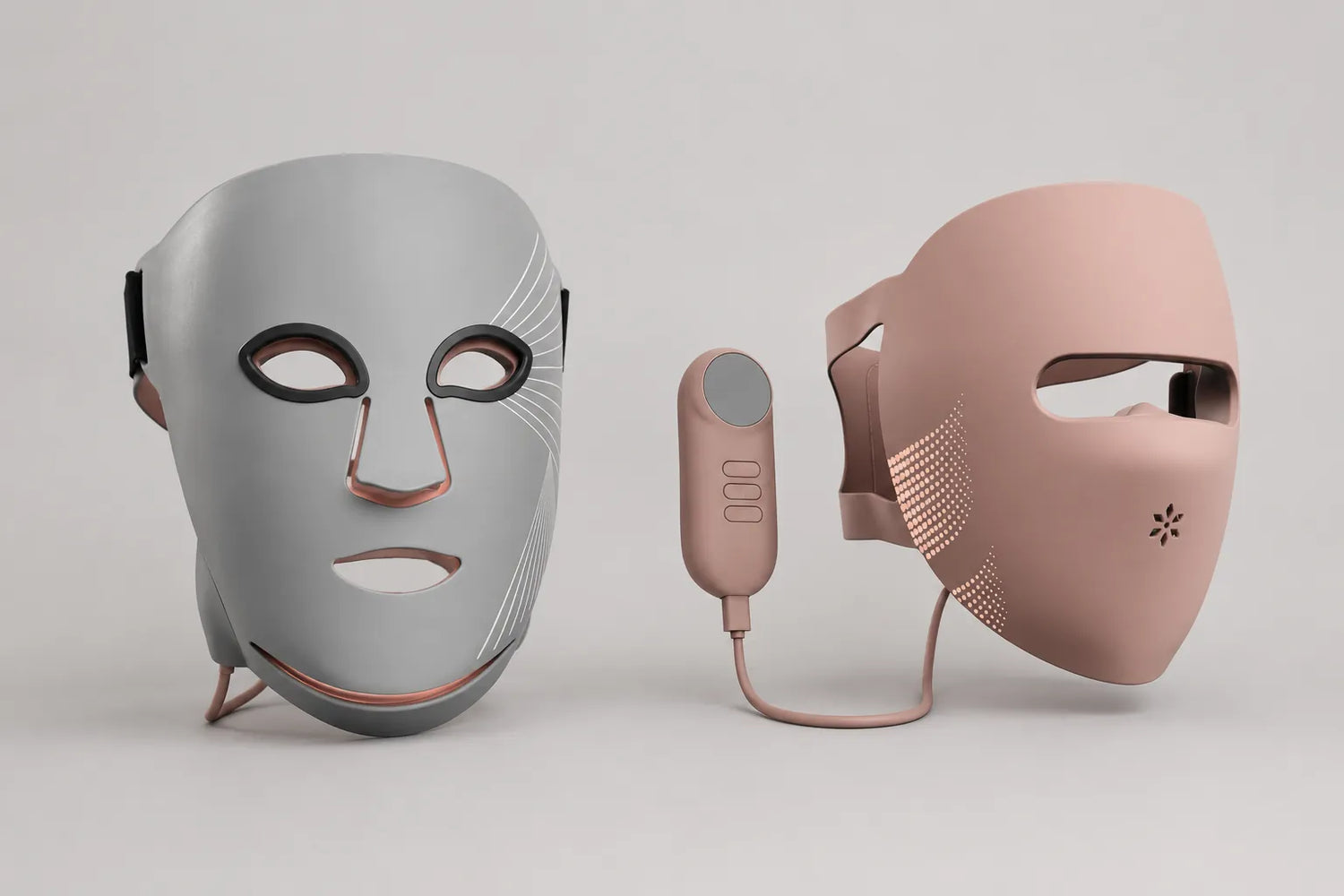
CurrentBody has just launched its Multi Light Therapy Mask at £499.99, and its headline feature is six wavelengths of light in a single device. It is the most expensive LED face mask the brand has released, and it raises an obvious question for anyone weighing up an at-home device: do you actually need six wavelengths, or are you paying a premium for colours of light you will rarely use?
This is an honest comparison between the CurrentBody Multi Light and the Lumovex Spectrum Pro Mask, which runs four focused wavelengths at £149.99. We will look at what each wavelength is actually for, where CurrentBody genuinely has an edge, and where a smaller, more targeted set of wavelengths may serve you just as well for a lot less money.
Quick answer
For most people looking after skin ageing, texture, tone and general radiance, four well-chosen wavelengths cover the ground that matters. CurrentBody's sixth-wavelength additions (a deeper near-infrared and a blue acne mode) are useful for specific goals, but they push the price to £499.99. The Lumovex Spectrum Pro delivers the core, best-evidenced wavelengths at £149.99, which is roughly £350 less.
What is on this page
- What each wavelength actually does
- Six wavelengths vs four: what you gain and what you pay
- Where CurrentBody genuinely has an edge
- Price and value
- Which one is right for you
- FAQ
What each wavelength actually does
Light therapy for skin works because different wavelengths are absorbed at different depths and by different structures in the skin. Red and near-infrared light are the most studied for skin ageing. Red light in the region of 630 to 660nm is absorbed in the outer and middle layers of the skin, where it is thought to support fibroblast activity and the natural production of collagen. Near-infrared light, from around 800nm upwards, travels deeper and is being studied for its role in recovery and deeper tissue support.
Research by Wunsch and Matuschka, published in Photomedicine and Laser Surgery, found that people treated with red and near-infrared light saw measurable improvements in skin complexion, feeling and collagen density compared with an untreated group. A broader review of light-emitting diodes in dermatology by Barolet set out how these wavelengths are absorbed and why red and near-infrared sit at the centre of the evidence base. This is why almost every serious LED mask, including both devices here, is built around red and near-infrared as its foundation.
The Lumovex Spectrum Pro Mask runs four wavelengths across 328 LED points: green 525nm, yellow 590nm, red 660nm and near-infrared 850nm. Green and yellow work nearer the surface and are associated with tone and the appearance of redness, while red and near-infrared do the deeper collagen and recovery work. CurrentBody's Multi Light adds two more on top of a similar core: a deeper near-infrared at 1072nm and a blue wavelength at 415nm aimed at blemish-prone skin.
Six wavelengths vs four: what you gain and what you pay
Here is the honest version. More wavelengths is not automatically better. CurrentBody's own marketing makes this point for us, describing the goal as the right balance of wavelengths rather than raw power. That is a sensible position, and it is exactly the argument for asking whether you need six.
The two wavelengths CurrentBody adds serve real but specific purposes. The 1072nm near-infrared penetrates deeper than a standard 850nm near-infrared, which may appeal if deep tissue support is your main goal. The 415nm blue mode targets the bacteria associated with breakouts, which is useful if blemishes are your primary concern rather than ageing. If neither of those is a priority for you, they are features you have paid for but may not use.
| Feature | Lumovex Spectrum Pro | CurrentBody Multi Light |
|---|---|---|
| Wavelengths | 4 (green 525, yellow 590, red 660, NIR 850nm) | 6 (incl. deep NIR 1072nm and blue 415nm) |
| Core red and near-infrared | 660nm and 850nm | 633nm and 830nm |
| Blue acne mode | No | Yes (415nm) |
| Price | £149.99 | £499.99 |
It is worth noting the core wavelengths differ slightly between the two. The Spectrum Pro uses red at 660nm and near-infrared at 850nm, both of which sit a little deeper than CurrentBody's 633nm and 830nm. Neither difference is dramatic, but it does undercut the idea that the more expensive device is automatically doing the deeper work.
Where CurrentBody genuinely has an edge
A fair comparison has to name where the more expensive device is actually ahead. CurrentBody's 1072nm near-infrared does penetrate deeper than the Spectrum Pro's 850nm. If your single most important goal is the deepest possible near-infrared exposure, that is a genuine point in CurrentBody's favour, and we are not going to pretend otherwise.
CurrentBody also has the larger brand presence, a long history of editorial coverage and a very large body of customer reviews. For some buyers that reassurance is worth paying for. The blue acne mode is a real inclusion too, and if breakouts rather than ageing are your main concern, a mask with a dedicated blue wavelength has something the Spectrum Pro does not.
What none of that changes is the price gap. You are looking at £499.99 against £149.99 for the core skin-ageing wavelengths that carry the strongest evidence.
Price and value
At £149.99, the Spectrum Pro is roughly £350 cheaper than the £499.99 Multi Light. For the price difference alone you could buy the Spectrum Pro and still have well over £300 left, comfortably below the price of the mask alone from CurrentBody.
Both masks are widely available in the UK, and the Spectrum Pro ships with free UK mainland delivery. Where they differ is not the shelf but the spec sheet and the price: the question is whether the two extra wavelengths on the Multi Light are worth roughly £350 to you.
Which one is right for you
Choose the CurrentBody Multi Light if the deepest near-infrared exposure is your priority, if you specifically want a built-in blue acne mode, and if the £499.99 price is not an obstacle.
Choose the Lumovex Spectrum Pro if your focus is skin ageing, texture, tone and radiance, if you want the core red and near-infrared wavelengths plus green and yellow for surface tone, and if you would rather put the £350 difference towards something else. It is the more sensible choice for the majority of people, which is most of us, who want the well-evidenced wavelengths without paying for extras they will not use.
Red light therapy is a consistency habit rather than a one-off treatment, so the device you will genuinely use several times a week matters more than the one with the longest spec sheet. For most people, four focused wavelengths at £149.99 is the version of that habit that actually gets kept.
Still comparing? See how both masks rank against the wider UK field in our best LED face mask UK roundup, which lines up nine devices on price, LED count and wavelengths. You can also browse our best-selling LED masks to see the full lineup.
FAQ
Do you really need six wavelengths in an LED mask?
Not for most goals. The core red and near-infrared wavelengths carry the strongest evidence for skin ageing, texture and tone, and green and yellow add surface-level tone support. A deeper near-infrared and a blue acne mode are useful for specific priorities, but if those are not your focus they are features you may pay for and rarely use.
Is the Lumovex Spectrum Pro as deep-penetrating as the CurrentBody Multi Light?
CurrentBody's 1072nm near-infrared penetrates deeper than the Spectrum Pro's 850nm, so for the deepest near-infrared exposure specifically, CurrentBody has the edge. However, the Spectrum Pro's core red at 660nm and near-infrared at 850nm actually sit a little deeper than CurrentBody's 633nm and 830nm.
Why is the Lumovex mask so much cheaper?
The Spectrum Pro focuses on four well-evidenced wavelengths across 328 LED points rather than six, and is priced at £149.99. It is designed to deliver the wavelengths that matter most for skin ageing without the premium attached to extra modes.
Can red light therapy help with skin ageing?
Studies of red and near-infrared light suggest it may help support the appearance of skin firmness, texture and complexion over consistent use. Results build gradually with regular sessions rather than appearing overnight, and individual outcomes vary.




Leave a comment
This site is protected by hCaptcha and the hCaptcha Privacy Policy and Terms of Service apply.