The UK LED mask market has exploded in 2026, and two names keep coming up in searches: Shark CryoGlow and the Lumovex Spectrum Pro Mask.
We put the Shark CryoGlow head-to-head against the Lumovex Spectrum Pro Mask - comparing the science, the specs, and the price - so you can decide which LED mask actually deserves a spot in your skincare routine.
Price Comparison - The Numbers Speak for Themselves
Let’s start with the elephant in the room.
| Feature | Shark CryoGlow | Lumovex Spectrum Pro |
|---|---|---|
| UK Price | £299.99 | £149.99 |
| Compare-at Price | - | £229 |
| Saving vs RRP | - | £79 |
| Payment Options | Klarna available | Klarna available |
| Shipping | Free UK | Free UK |
That’s a £150 price difference for two masks targeting the same skin concerns. The Lumovex Spectrum Pro costs half the price of the Shark CryoGlow - and as you’ll see below, the specs tell an interesting story about which device uses more research-backed technology.
For context, the market leader CurrentBody sells at £399.99 - making Lumovex the strongest value play in the UK LED mask market by a significant margin.
Wavelengths - This Is Where It Gets Interesting
This is the most important comparison point, and it’s where Lumovex pulls ahead on the science.
The Shark CryoGlow uses 630nm red light. The Lumovex Spectrum Pro uses 660nm red light plus 850nm near-infrared.
Why does this matter? The 660nm wavelength is the most extensively studied in peer-reviewed dermatological research. A landmark study by Wunsch and Matuschka (2014) specifically used wavelengths in the 611-650nm range and demonstrated significant improvements in skin complexion, collagen density, and skin feeling. Research by Avci and colleagues (2013) in Seminars in Cutaneous Medicine and Surgery established that wavelengths around 660nm offer optimal penetration depth for skin rejuvenation applications.
The Lumovex also adds 850nm near-infrared, which penetrates deeper into tissue and may support recovery and circulation benefits that red light alone cannot reach.
The Shark CryoGlow’s 630nm wavelength does fall within the therapeutic red light spectrum, but it sits at the shorter end with less clinical evidence specifically supporting its use for skin rejuvenation compared to 660nm.
The Cooling Feature - Marketing or Science?
Shark’s headline feature is CryoGlow cooling technology. It sounds impressive, but here’s what the research actually says: there is no published clinical evidence that cooling the skin during LED light therapy enhances the therapeutic effects of the light wavelengths themselves.
Cooling may feel pleasant and could help with comfort during the session. But it’s a comfort feature, not a clinical one. If you’re choosing between two masks, the wavelength technology matters far more than whether the mask feels cold on your face.
Coverage and Design
The physical design differences are worth noting.
Shark CryoGlow:
- Covers forehead, cheeks, chin, and under-eye area
- Built-in cooling fans (which means it produces noise during use)
- Touch panel controls on the device
- Available in “Blue Frost” colour
Lumovex Spectrum Pro:
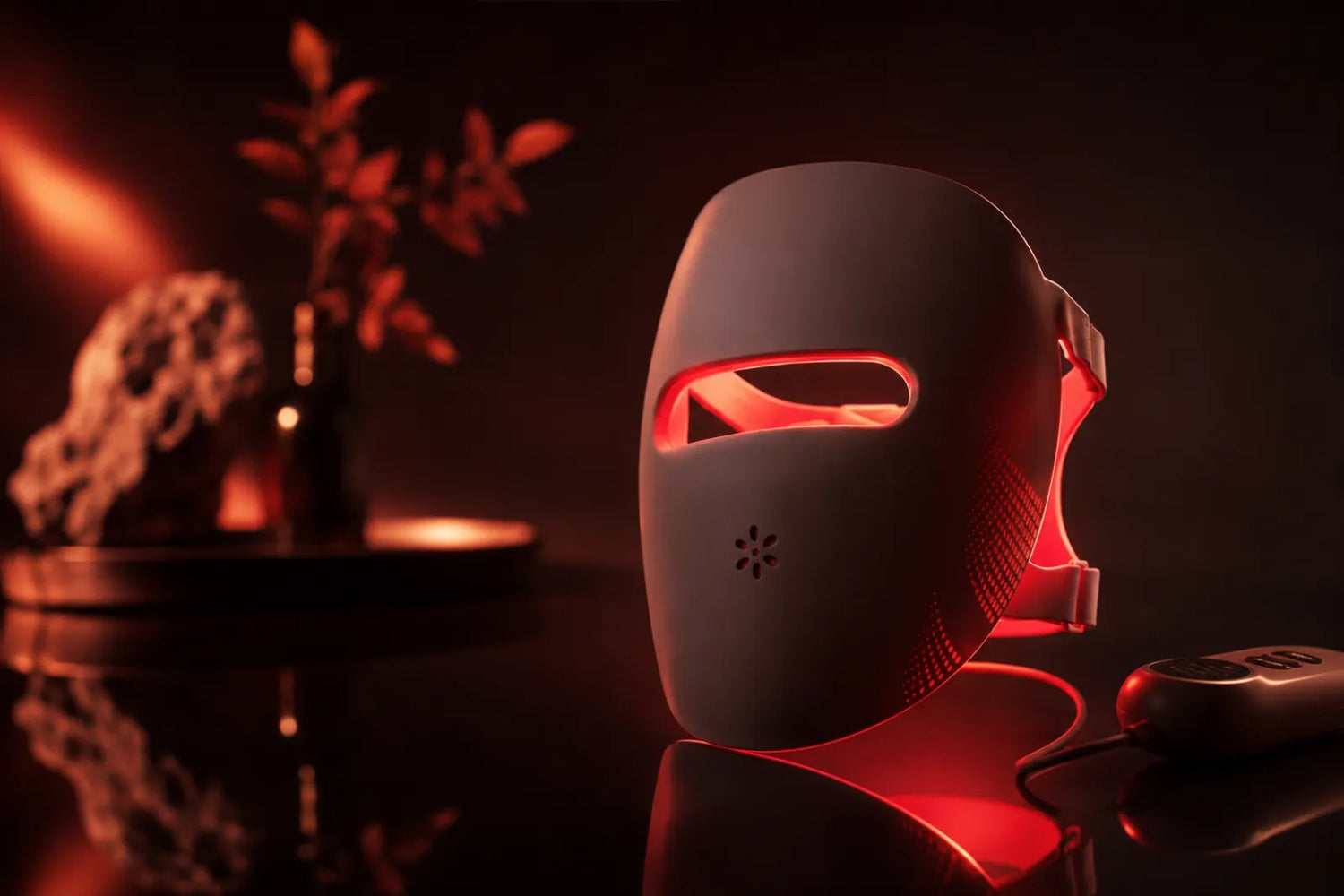
- Full-face coverage with open eye visor (you can see during treatment)
- Completely silent operation (no fans or moving parts)
- Separate controller for easy mode selection
- Optional Mask + Neck Bundle available for £194.99 - extending treatment to the neck area, which is often the first place to show signs of ageing
The open eye visor on the Lumovex means you can scroll your phone, watch TV, or keep an eye on the kids during your 10-minute session. With the Shark, you’re essentially blind for the duration.
Session Time and Ease of Use
| Feature | Shark CryoGlow | Lumovex Spectrum Pro |
|---|---|---|
| Session Time | 10 minutes | 10 minutes |
| Modes | 4 preset modes | 4 modes (Red, Green, Yellow, Red + Infrared) |
| Controller | Built-in touchpad | Detachable controller |
| Charging | USB-C dock | USB-C cable |
Both masks are straightforward to use. The Shark offers multiple colour modes including blue light (which targets bacteria for blemish-prone skin). The Lumovex leads with red and near-infrared, the two wavelengths with the strongest evidence base for skin rejuvenation and anti-ageing, and adds green and yellow modes to support calmer, brighter-looking skin.
Brand and Trust
Shark is a household name, primarily known for vacuum cleaners and kitchen appliances. They entered the beauty market in 2024 with a significant influencer marketing campaign - reportedly working with over 50 influencers and achieving 3 million impressions at launch.
Lumovex is a specialist red light therapy brand. Every product in the range uses research-backed wavelengths, and the company focuses exclusively on light therapy rather than spreading across multiple product categories.
There’s something to be said for buying from a company whose entire business is built around the technology you’re investing in.
After-Sales and Warranty
| Feature | Shark CryoGlow | Lumovex Spectrum Pro |
|---|---|---|
| Warranty | 2 years | 1 year |
| Returns | 14 days | 30 days |
| UK Support | Yes | Yes - UK-based team |
Both Shark and Lumovex offer a 2-year warranty. Both offer 30-day returns and UK-based customer support.
The Verdict
Choose the Shark CryoGlow if:
- You want a cooling sensation during treatment
- You prefer buying from a well-known household brand
- A 2-year warranty is important to you
- You want blue light mode for blemish-prone skin
Choose the Lumovex Spectrum Pro if:
- You want the most research-backed wavelengths (660nm + 850nm)
- You want to save £150 compared to Shark
- You prefer silent operation
- You want to see during treatment (open eye visor)
- You might want to add neck coverage later
For most people focused on skin rejuvenation and anti-ageing, the Lumovex Spectrum Pro offers stronger science at half the price. The 660nm wavelength has more clinical backing than 630nm, the 850nm near-infrared adds deeper tissue benefits, and you’re saving £150 that could go toward the Red Light Therapy Belt for targeted body treatment or the Pro Panel 540 for full-body sessions.
Shop the Spectrum Pro Mask - £149.99 with free UK mainland delivery
Want to see how the Spectrum Pro compares beyond Shark? Our best LED face mask UK guide ranks nine masks, including CurrentBody, Omnilux and Dr Dennis Gross, on price and wavelengths.
Frequently Asked Questions
Is the Shark CryoGlow actually effective for anti-ageing?
The Shark CryoGlow uses 630nm red light, which does fall within the therapeutic spectrum. However, most clinical studies on skin rejuvenation have focused on wavelengths around 660nm, which is what the Lumovex Spectrum Pro uses. Both devices may support skin health, but the evidence base is stronger for 660nm.
Why is the Lumovex so much cheaper than the Shark?
Shark invests heavily in influencer marketing and retail distribution, which adds to the product cost. Lumovex sells direct-to-consumer through their own website, cutting out middlemen and marketing overhead. The savings are passed directly to the customer.
Does the cooling feature on the Shark actually improve results?
There is no published clinical evidence that cooling the skin during LED therapy enhances the effects of the light wavelengths. The CryoGlow cooling is a comfort feature that may make the experience feel more pleasant, but it doesn’t appear to improve the therapeutic outcomes of the LED treatment itself.
Can I use the Lumovex mask while doing other things?
Yes. The Lumovex Spectrum Pro features an open eye visor, meaning you can see clearly during your 10-minute session. You can scroll your phone, watch television, read, or supervise children. The Shark CryoGlow does not have this feature.
Which mask is better for anti-ageing specifically?
For anti-ageing, the Lumovex Spectrum Pro has the edge. It uses 660nm red light (the most studied wavelength for collagen support and skin rejuvenation) plus 850nm near-infrared (which penetrates deeper for tissue recovery). The Shark uses 630nm, which has less specific clinical evidence for anti-ageing applications.
Is 630nm or 660nm better for red light therapy?
Both wavelengths fall within the therapeutic red light window, but 660nm has significantly more clinical research supporting its use for skin rejuvenation. The landmark Wunsch and Matuschka (2014) study used wavelengths in the 611-650nm range with positive results, while broader photobiomodulation research by Avci and colleagues (2013) established 660nm as a key therapeutic wavelength. Most professional-grade devices use 660nm for this reason.




Leave a comment
This site is protected by hCaptcha and the hCaptcha Privacy Policy and Terms of Service apply.