

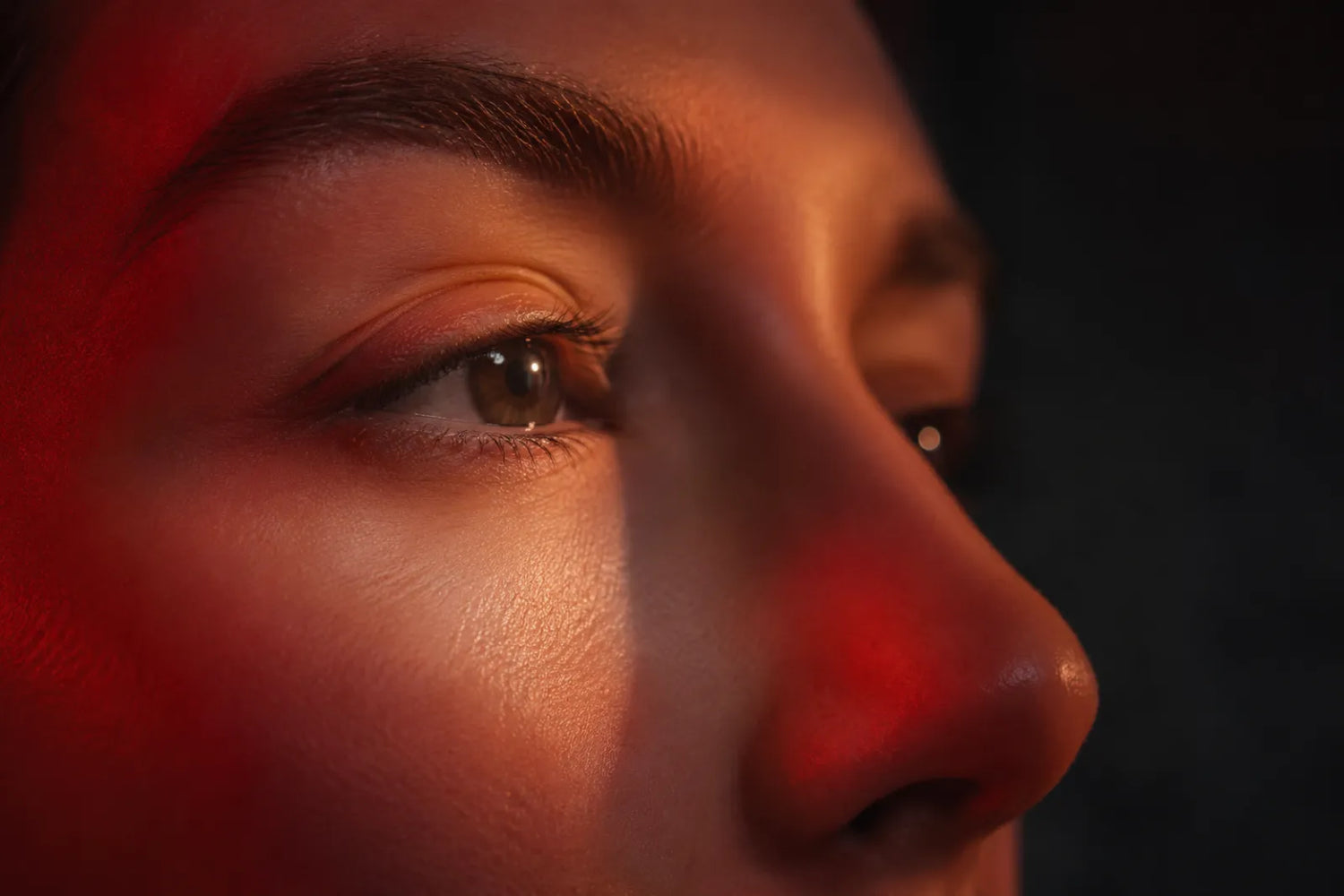
Red Light Therapy for Dark Circles: What the Science Says
Dark circles. Eye bags. That tired look that no amount of sleep seems to fix.
If you've tried every eye cream on the market with minimal results, you might be curious whether red light therapy can help. Here's what we know.
Why Dark Circles Are So Stubborn
Before we talk solutions, let's understand the problem. Dark circles have multiple causes:
Thin skin: The under-eye area has some of the thinnest skin on your body. Blood vessels show through more easily.
Loss of collagen: As we age, we lose fat and collagen around the eyes, making hollows more prominent.
Poor circulation: Sluggish blood flow causes blood to pool, creating that bluish-purple tint.
Pigmentation: Some people have hereditary hyperpigmentation in this area.
Lifestyle factors: Lack of sleep, dehydration, stress, and screen time all contribute.
Most eye creams only address surface hydration. They can't thicken skin, boost circulation, or stimulate collagen production at depth. That's where light therapy becomes interesting.
How Red Light Helps the Under-Eye Area
Red light therapy works on several of the root causes:
Collagen stimulation: Red wavelengths (630-660nm) penetrate the skin and stimulate fibroblast cells to produce more collagen. For precise application to the under-eye area, the Lumovex Sculpt Wand allows targeted spot treatment. This can help thicken the delicate under-eye skin over time.
Improved circulation: Light therapy increases blood flow to treated areas. Better circulation means less pooling and that reduced bluish appearance.
Cellular energy: By boosting ATP production in cells, red light supports overall skin health and repair mechanisms.
Reduced inflammation: Near-infrared wavelengths (850nm) penetrate deeper and help calm inflammation, which can contribute to puffiness.
What the Research Shows
Studies specifically on red light therapy for dark circles are limited, but related research is promising:
- A 2014 study found red light therapy significantly increased collagen density in facial skin
- Multiple studies show improved skin texture and reduced fine lines around the eyes
- Research confirms increased blood flow following red light exposure
The mechanism is sound. Whether it works for your specific dark circles depends on the cause.
Realistic Expectations
Let's be honest about what red light therapy can and cannot do:
Good candidates:
May see limited results:
Timeline: The under-eye area responds well to treatment, but patience is key:
How to Treat the Eye Area Safely
The skin around your eyes is delicate. Here's how to approach it:
Use appropriate devices: Full-face LED masks are designed with eye safety in mind. The Lumovex Spectrum Pro Mask, for example, includes coverage for the under-eye area at safe intensities.
Eye protection: Most quality face masks are safe without additional eye protection, but always follow manufacturer guidelines. If using a panel, close your eyes or wear goggles.
Be gentle: Don't press devices hard against the eye area. Let the light do the work.
Consistency over intensity: 10-15 minutes, 4-5 times per week is more effective than occasional longer sessions.
Combining with Other Treatments
Red light therapy works well alongside other approaches:
Eye serums: Apply after treatment when skin is primed to absorb ingredients. Look for peptides, vitamin C, or caffeine.
Gentle massage: Light lymphatic drainage massage can enhance circulation benefits.
Hydration: Well-hydrated skin looks plumper. Drink water and use a hydrating eye cream.
Sleep and lifestyle: Red light can't fully compensate for chronic sleep deprivation or dehydration.
The Bottom Line
Red light therapy won't eliminate dark circles overnight. But for many people, consistent treatment can make a genuine difference by addressing root causes rather than just masking symptoms.
The key questions to ask yourself:
If you answered yes to these, red light therapy is worth trying.




Leave a comment
This site is protected by hCaptcha and the hCaptcha Privacy Policy and Terms of Service apply.