

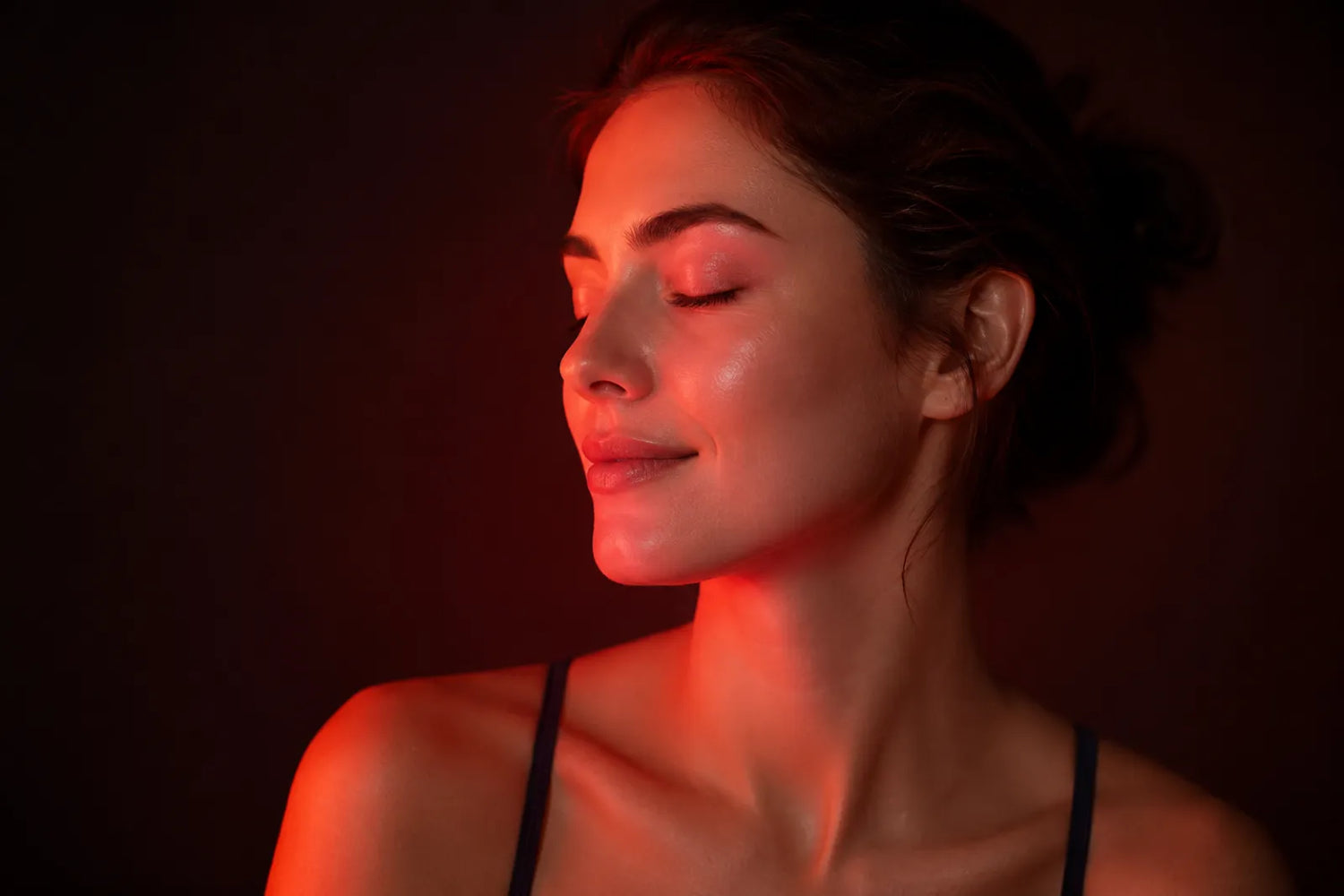
If you've been scrolling through wellness content lately, you've probably seen celebrities, athletes, and skincare enthusiasts raving about red light therapy. But what exactly is it, and does it actually work? Let's cut through the marketing hype and give you the facts.
What Is Red Light Therapy?
Red light therapy uses specific wavelengths of red and near-infrared light to stimulate cellular function. Unlike UV light, which damages skin, red light is non-invasive and considered very safe.
The science is straightforward: red light penetrates your skin and is absorbed by the mitochondria, the powerhouses of your cells. This triggers a cascade of biological processes:
- Increased ATP production (cellular energy)
- Support for collagen synthesis
- Improved blood circulation
- A calmer inflammatory response
- Support for tissue repair
The Science Behind It
This isn't pseudoscience. NASA research in the 1990s explored light therapy for wound healing, and since then thousands of peer-reviewed studies have examined its effects across skin, recovery, and wellness applications.
Key wavelengths to know:
| Wavelength | Penetration | Primary Benefits |
|---|---|---|
| 630-660nm (Red) | 2-3mm (skin surface) | Collagen, fine lines, skin health |
| 810-850nm (Near-Infrared) | 5-10mm (deeper tissue) | Muscle recovery, joint comfort, inflammation |
Most quality devices combine both wavelengths for comprehensive benefits.
What Can Red Light Therapy Help With?
Skin health
- Reducing the appearance of fine lines and wrinkles
- Improving skin tone and texture
- Supporting wound healing
- Calming acne-related inflammation
- Helping fade the appearance of marks and scarring
Recovery and comfort
- Muscle recovery after workouts
- Joint comfort and stiffness
- Supporting a healthy inflammatory response
- Supporting injury rehabilitation
Wellness
- Supporting sleep quality
- Supporting energy levels
- Supporting hair growth
- Supporting mood and relaxation
How Often Should You Use It?
Consistency matters more than duration. Here's a general guideline:
- Face and skin: 10 to 15 minutes with the Lumovex Spectrum Pro Mask, 3 to 5 times per week
- Body and recovery: 15 to 20 minutes with the Pro Panel 540, 3 to 4 times per week
- Maintenance: 2 to 3 times per week once results are achieved
More isn't always better. Your cells need time to respond and repair between sessions.
Choosing the Right Device
When shopping for a red light device, look for:
- Correct wavelengths (630 to 660nm red, 810 to 850nm near-infrared)
- Adequate power output (irradiance measured in mW/cm²)
- High-output LEDs (not generic, unspecified imports)
- A treatment area that matches your intended use
- Warranty and support (UK-based customer service is a plus)
Avoid devices that don't specify wavelengths, use a generic "LED" label with no power specs, have no reviews or research backing, or are suspiciously cheap. You generally get what you pay for.
Getting Started at Home
Ready to try red light therapy? Here's how to begin:
Weeks 1 to 2: build the habit. Start with 5 to 10 minute sessions every other day. Your skin needs time to adapt.
Weeks 3 to 4: increase consistency. Move to 10 to 15 minute sessions, 4 to 5 times per week. This is when most people start noticing subtle changes.
Month 2 onwards: maintain and observe. By now you should see visible improvements in skin texture and tone. Continue regular sessions.
Tips for best results:
- Cleanse your face before treatment (no makeup or heavy creams). If you travel regularly, the Portable LED Panel keeps your routine consistent on the road
- Stay hydrated
- Be patient - this isn't an overnight miracle
- Take progress photos weekly
Is Red Light Therapy Safe?
Yes, when used correctly. Unlike UV light, red light doesn't damage skin or increase cancer risk. That said, you should:
- Wear eye protection with high-powered panels (most face masks are comfortable without)
- Avoid use with photosensitising medications (check with your GP)
- Start slowly if you have sensitive skin
Pregnant women and those with epilepsy should consult their doctor first.
Frequently Asked Questions
Does red light therapy really work?
Yes, for the right goals. It is one of the better-researched wellness tools, with the strongest evidence for skin health, collagen support, and recovery. It works gradually through real biological mechanisms, not overnight.
Is red light therapy safe for beginners?
Very. It is non-invasive and uses no UV light. Start with shorter sessions, use eye protection with powerful panels, and check with your GP if you are pregnant or take light-sensitising medication.
What should a beginner buy first?
Pick one device around your main goal: a mask for skin, or a panel, belt, or mat for the body. Consistency with one well-chosen device beats owning several you rarely use.
How soon will I see results?
Most beginners notice subtle changes within 2 to 4 weeks and clearer results by month 2 to 3, provided they use it consistently.
The Bottom Line
Red light therapy is one of the few wellness trends backed by genuine science. It's not magic; it works through well-understood biological mechanisms. The key is consistency and quality, since a good device used regularly will outperform an expensive one gathering dust. If you're ready to start, we've designed our devices specifically for at-home use, combining high-output LEDs with practical design and honest pricing. Browse the full Lumovex range to find your fit.


Leave a comment
This site is protected by hCaptcha and the hCaptcha Privacy Policy and Terms of Service apply.